

As ecommerce continues to expand worldwide, businesses are reevaluating how they store, manage, and deliver inventory. What once worked for wholesalers or traditional distributors may no longer meet the expectations of today’s online shoppers. Consumers expect fast shipping, real-time order tracking, flexible delivery options, and seamless returns—requirements that demand far more than simply storing products on warehouse shelves.
This is where ecommerce fulfillment becomes a competitive advantage.
Although the terms warehousing and fulfillment are often used interchangeably, they represent two very different logistics strategies. Traditional warehousing focuses primarily on inventory storage, while ecommerce fulfillment is designed to process orders quickly, accurately, and efficiently from the moment a customer clicks “Buy Now” until the package arrives at their door.
In 2026, understanding the differences between ecommerce fulfillment and traditional warehousing is essential for brands seeking to scale internationally, improve customer satisfaction, and optimize logistics costs. Choosing the right model can influence delivery speed, inventory turnover, transportation efficiency, and long-term profitability.
Whether you’re an emerging ecommerce retailer or an established business expanding into new markets, selecting the right fulfillment strategy will directly impact your ability to compete.
What Is Ecommerce Fulfillment?
Ecommerce fulfillment is the complete process of receiving inventory, storing products, processing online orders, picking and packing items, shipping orders, managing returns, and maintaining inventory accuracy.
Unlike traditional warehousing, fulfillment operations are built around continuous order processing rather than long-term inventory storage.
A modern ecommerce fulfillment operation typically includes:
- Inventory receiving
- Storage management
- Order processing
- Picking and packing
- Shipping coordination
- Returns management
- Inventory reporting
- Customer order visibility
As discussed in ecommerce logistics services, successful ecommerce operations depend on integrating fulfillment with transportation, inventory management, freight forwarding, and customer delivery into one coordinated logistics strategy.
What Is Traditional Warehousing?
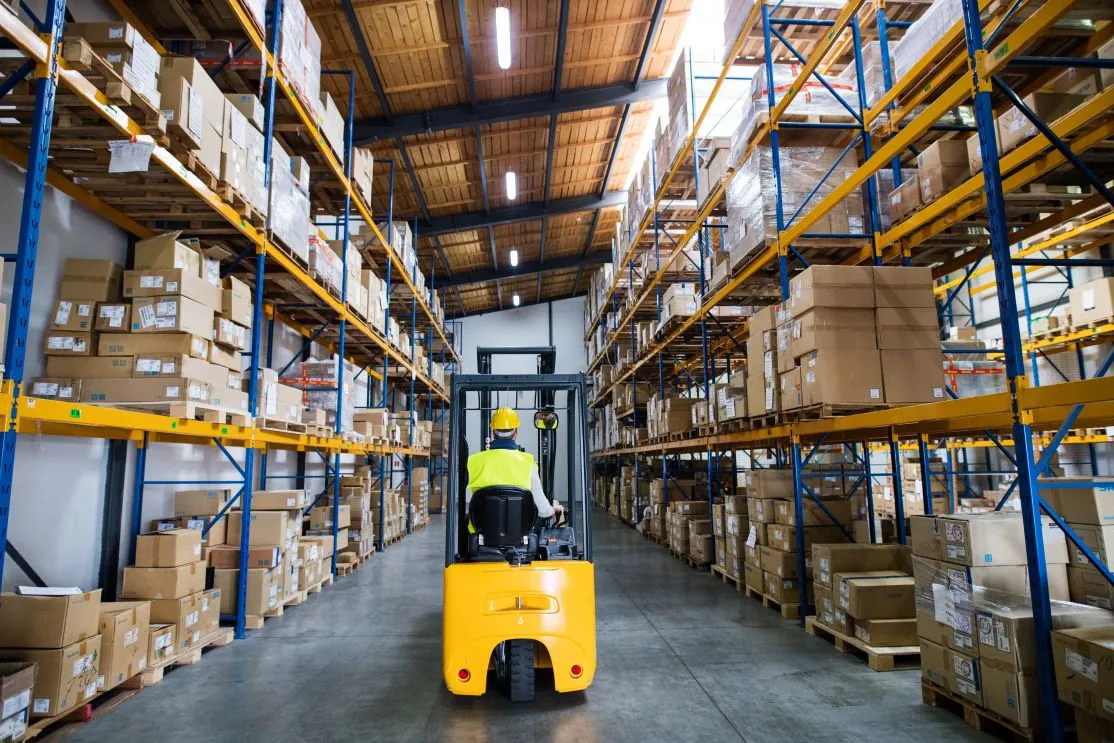
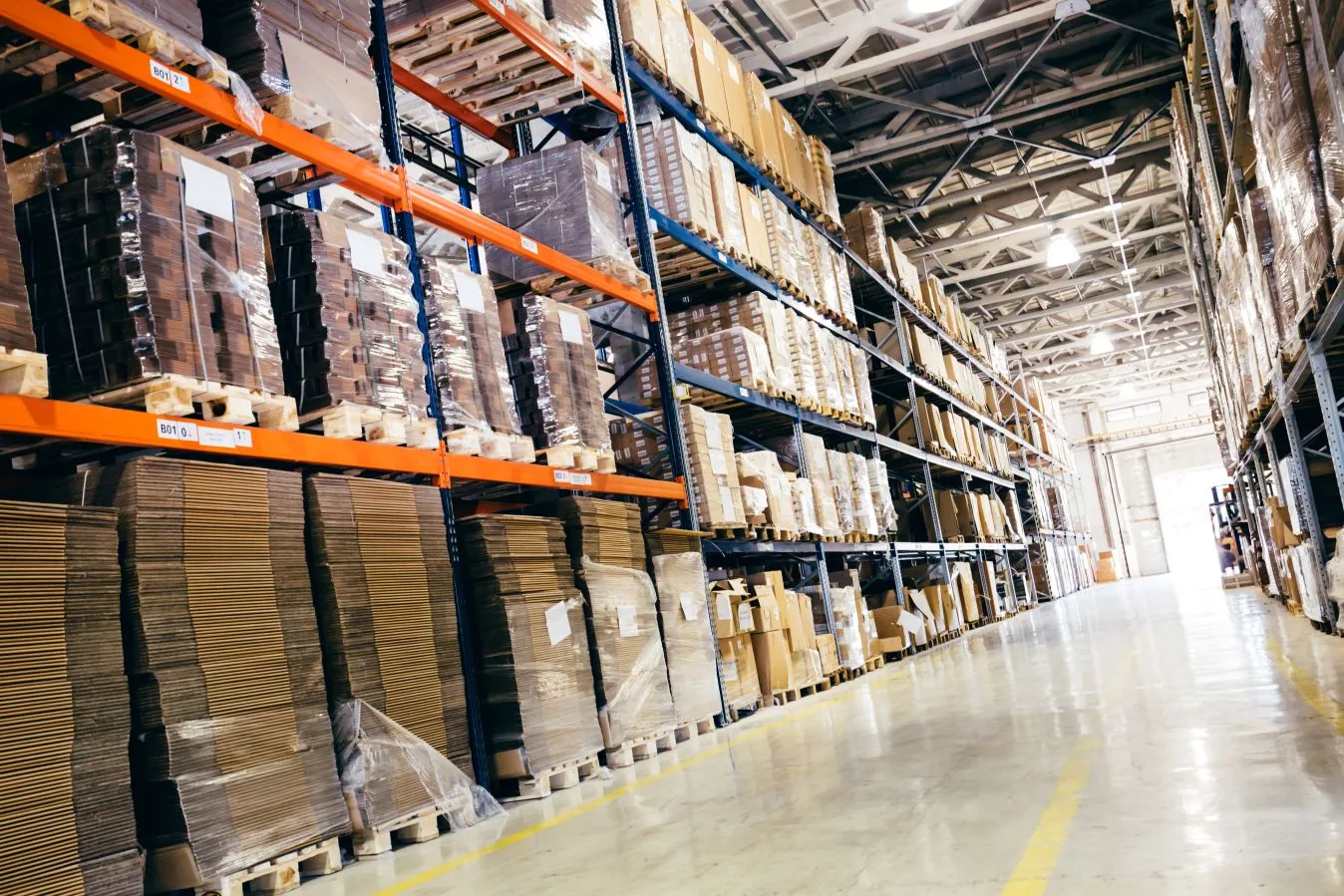
Traditional warehousing focuses primarily on storing inventory until it is needed.
Historically, warehouses have supported manufacturers, wholesalers, and distributors by holding products in bulk before shipment to retailers or distribution centers.
Typical warehouse activities include:
- Receiving palletized inventory
- Long-term storage
- Inventory counting
- Bulk shipment preparation
- Stock replenishment
Traditional warehouses generally process fewer transactions than fulfillment centers because shipments often involve pallet or case quantities rather than individual customer orders.
While warehousing remains essential for supply chains, it was not originally designed to support today’s high-volume ecommerce environment.
The Biggest Differences Between Fulfillment and Warehousing
Although both involve inventory storage, their objectives differ significantly.
Purpose
Traditional warehousing focuses on storing products efficiently.
Ecommerce fulfillment focuses on moving products quickly and accurately to customers.
Order Volume
Warehouses typically process fewer but larger shipments.
Fulfillment centers handle thousands of individual customer orders that require rapid processing and shipment.
Speed
Traditional warehouses prioritize storage efficiency.
Fulfillment operations prioritize order speed and customer satisfaction.
Companies improving ecommerce transit times understand that faster order processing inside the warehouse directly contributes to faster overall delivery performance.
Technology
Modern ecommerce fulfillment centers rely heavily on technology, including:
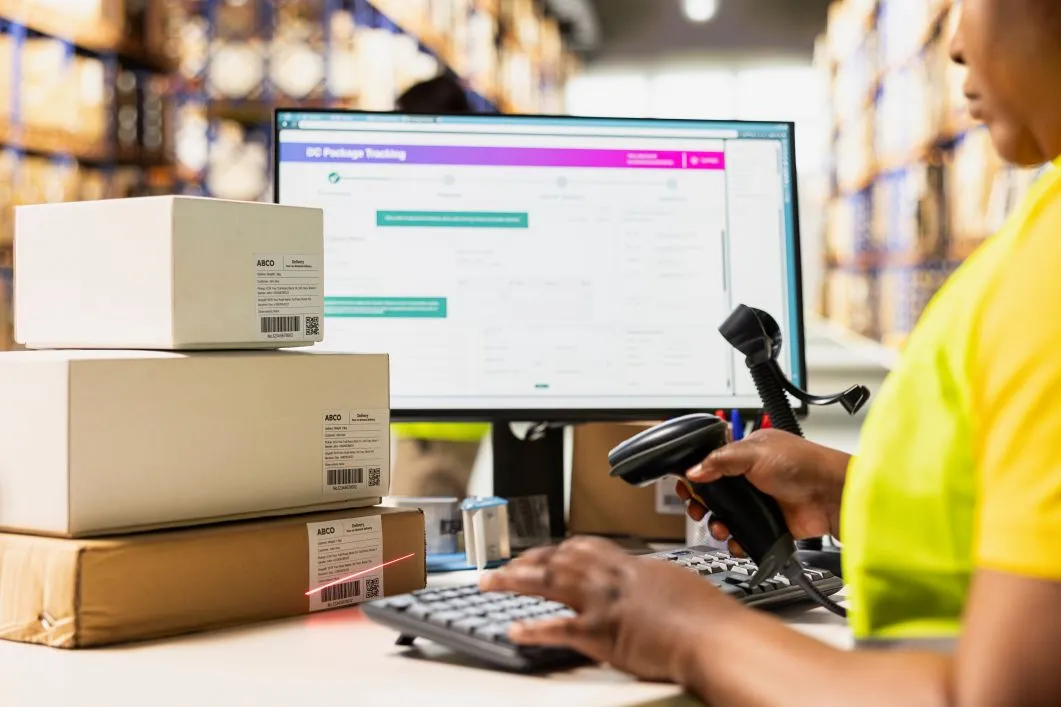
- Warehouse Management Systems (WMS)
- Barcode scanning
- Automated picking
- Inventory synchronization
- Real-time reporting
- Order management software
According to Gartner’s supply chain research, digital warehouse technologies continue improving operational efficiency while reducing fulfillment errors.
Why Ecommerce Fulfillment Matters More Than Ever
Customer expectations have fundamentally changed.
According to global ecommerce market statistics, online shopping continues expanding across international markets while consumers increasingly prioritize delivery speed and reliability.
Modern customers expect:
- Same-day or next-day processing
- Accurate inventory availability
- Real-time shipment tracking
- Fast delivery
- Easy returns
Traditional warehousing alone cannot consistently meet these expectations.
Ecommerce fulfillment enables businesses to process orders continuously while maintaining inventory accuracy and improving customer satisfaction.
As ecommerce continues growing, fulfillment efficiency is becoming one of the strongest competitive differentiators available to online retailers.
Ecommerce Fulfillment Supports International Growth
Expanding internationally introduces additional logistics complexity.
Businesses selling globally must coordinate:
- Inventory placement
- Cross-border transportation
- Customs compliance
- Regional fulfillment
- Final-mile delivery
As explored in cross border fulfillment, integrated fulfillment operations help businesses create faster and more reliable international customer experiences.
Rather than shipping every order from a single warehouse, many organizations strategically position inventory closer to major customer markets.
This reduces delivery times while lowering transportation costs.
Freight Forwarding and Fulfillment Work Together
Many businesses mistakenly view freight forwarding and fulfillment as separate logistics functions.
In reality, they are closely connected.
Freight forwarding ensures products move efficiently between countries.
Fulfillment ensures products move efficiently from inventory to customers.
As discussed in digital freight forwarding, modern freight forwarding providers increasingly integrate transportation planning with fulfillment strategies to improve visibility and operational efficiency.
This coordination enables businesses to replenish inventory more effectively while maintaining consistent order fulfillment performance.
Inventory Management Is the Bridge Between Both Models
Whether operating a warehouse or a fulfillment center, inventory management remains critical.
The difference lies in how inventory is utilized.
Traditional warehouses prioritize storage utilization.
Fulfillment centers prioritize inventory availability and rapid order execution.
Businesses investing in ecommerce demand forecasting can better predict customer demand and replenish inventory before shortages occur.
This improves fulfillment performance while reducing unnecessary inventory carrying costs.
When Traditional Warehousing Still Makes Sense
Despite the growth of ecommerce fulfillment, traditional warehousing continues to provide significant value.
It remains appropriate for businesses that:
- Ship large wholesale orders
- Maintain long-term inventory reserves
- Serve manufacturing operations
- Move palletized freight
- Require bulk distribution
Many organizations combine warehousing and fulfillment within the same supply chain.
Bulk inventory may first enter a warehouse before smaller quantities are transferred to fulfillment centers closer to customers.
This hybrid approach improves flexibility while supporting scalable growth.
When Should a Growing Brand Transition to Ecommerce Fulfillment?
One of the most common questions businesses ask is when they should move from traditional warehousing to a dedicated ecommerce fulfillment model.
While there is no universal threshold, several indicators suggest that a transition may be beneficial.
Your business may be ready if you experience:
- Increasing daily order volumes
- Longer order processing times
- Inventory inaccuracies
- Growing international sales
- Rising customer expectations
- Difficulty managing returns
- Limited warehouse space
As order volumes increase, manual warehouse processes often become bottlenecks that affect customer satisfaction and operational efficiency.
Transitioning to ecommerce fulfillment allows businesses to automate workflows, improve order accuracy, and scale without significantly increasing operational complexity.
Comparing Costs: Fulfillment vs Traditional Warehousing
Many companies assume ecommerce fulfillment is more expensive than traditional warehousing.
In reality, the comparison should consider total operational cost rather than storage expenses alone.
Traditional warehousing typically involves costs related to:
- Storage space
- Labor
- Equipment
- Utilities
- Inventory handling
Ecommerce fulfillment includes additional services such as:
- Order processing
- Pick and pack
- Shipping coordination
- Returns management
- Inventory synchronization
- Customer order tracking
Although fulfillment services may involve additional operational fees, they often reduce hidden costs associated with slow processing, shipping errors, inventory inaccuracies, and customer dissatisfaction.
As discussed in freight cost optimization, the objective should always be improving total supply chain efficiency rather than minimizing one isolated expense.
Growing ecommerce brands frequently discover that fulfillment improves profitability by increasing operational productivity and customer retention.
Automation Is Transforming Ecommerce Fulfillment
Warehouse automation has become one of the defining trends in modern logistics.
Today’s fulfillment centers increasingly utilize technologies that improve both speed and accuracy.
Common automation tools include:
- Warehouse Management Systems (WMS)
- Barcode scanning
- RFID inventory tracking
- Automated picking systems
- Conveyor automation
- Inventory synchronization
- AI-powered analytics
These technologies reduce manual work while improving inventory visibility and order accuracy.
According to McKinsey & Company’s operations research, warehouse automation is enabling businesses to improve productivity while supporting more scalable fulfillment operations.
Automation is no longer reserved for enterprise retailers. Increasingly, mid-sized ecommerce businesses are adopting these technologies to remain competitive.
Artificial Intelligence Is Improving Fulfillment Operations
Artificial intelligence is becoming an important component of ecommerce fulfillment.
Rather than simply accelerating warehouse processes, AI helps businesses make smarter operational decisions.
Applications include:
- Demand forecasting
- Inventory optimization
- Workforce planning
- Order prioritization
- Shipping optimization
- Carrier selection
- Predictive inventory replenishment
As explored in AI freight forwarding, artificial intelligence is improving logistics performance across transportation and fulfillment operations.
Businesses combining AI with ecommerce fulfillment gain greater visibility while reducing operational inefficiencies.
Common Mistakes Growing Brands Make
Many ecommerce businesses delay fulfillment improvements until operational problems become unavoidable.
Some of the most common mistakes include:
Treating Warehousing and Fulfillment as the Same Service
Inventory storage alone does not guarantee efficient order processing.
Growing brands should evaluate whether their logistics operations are designed around storage or customer fulfillment.
Waiting Too Long to Scale
Businesses often postpone investing in fulfillment until customer complaints begin increasing.
Planning fulfillment capacity ahead of growth creates a smoother expansion process.
Ignoring International Logistics
As ecommerce expands globally, fulfillment strategies must align with international transportation.
Businesses investing in cross border logistics can improve delivery performance while supporting scalable international growth.
Underestimating Returns
Returns represent an essential component of ecommerce fulfillment.
Efficient reverse logistics improve customer satisfaction while reducing operational costs.
Growing brands should ensure fulfillment providers can manage both outbound and return shipments effectively.
Frequently Asked Questions About Ecommerce Fulfillment
What is ecommerce fulfillment?
Ecommerce fulfillment is the complete process of receiving inventory, storing products, processing customer orders, packing shipments, coordinating transportation, delivering products, and managing returns.
Is warehousing the same as fulfillment?
No.
Warehousing primarily focuses on inventory storage, while ecommerce fulfillment includes every operational step required to deliver products directly to customers.
When should a business outsource fulfillment?
Businesses should consider outsourcing when order volumes increase, international expansion begins, warehouse operations become inefficient, or customer expectations exceed internal logistics capabilities.
Does ecommerce fulfillment improve customer satisfaction?
Yes.
Faster processing, improved inventory accuracy, real-time shipment visibility, and reliable delivery all contribute to a better customer experience.
Can fulfillment support international ecommerce?
Absolutely.
Modern fulfillment centers frequently integrate with freight forwarding, customs processes, and international transportation networks to support global ecommerce operations.
How LCX Freight Supports Ecommerce Fulfillment
LCX Freight helps growing businesses build logistics strategies that integrate fulfillment, freight forwarding, transportation, and inventory management into one seamless operation.
Our global logistics capabilities allow businesses to improve operational performance while preparing for long-term growth.
Our solutions include:
- Ecommerce fulfillment support
- International freight forwarding
- Air freight coordination
- Ocean freight management
- Cross-border logistics
- Multimodal transportation planning
- Shipment visibility
- Inventory coordination
By combining fulfillment expertise with international transportation services, LCX Freight helps businesses create supply chains that are scalable, flexible, and customer-focused.
Whether shipping domestically or expanding into global markets, our integrated approach helps brands improve delivery performance while maintaining operational efficiency.
The Future of Ecommerce Fulfillment
The future of ecommerce fulfillment will continue to be shaped by automation, artificial intelligence, predictive analytics, and increasingly connected global supply chains.
Several trends are expected to define the next generation of fulfillment operations:
- AI-powered inventory management
- Warehouse robotics
- Greater shipment visibility
- Predictive order fulfillment
- Digital freight forwarding
- Sustainable logistics
- Regional fulfillment hubs
- Smarter multimodal transportation
According to the World Economic Forum, digital transformation and resilient supply chains will continue driving innovation across global logistics.
Businesses investing today in modern fulfillment capabilities will be better positioned to respond to changing customer expectations while supporting long-term ecommerce growth.
Conclusion
As ecommerce continues to evolve, businesses must rethink how products move from inventory to customers.
Traditional warehousing remains an important part of many supply chains, particularly for wholesale distribution and long-term inventory storage. However, growing ecommerce brands require logistics operations designed around speed, flexibility, visibility, and customer experience.
Ecommerce fulfillment provides the technology, operational efficiency, and scalability necessary to meet these expectations while supporting domestic and international growth.
Rather than replacing traditional warehousing, fulfillment complements it by transforming stored inventory into efficiently delivered customer orders.
By combining ecommerce fulfillment with integrated freight forwarding, intelligent inventory planning, and global transportation expertise, businesses can build resilient supply chains capable of supporting future expansion.
For brands looking to scale confidently in today’s competitive marketplace, investing in ecommerce fulfillment is no longer simply an operational improvement—it is a strategic decision that strengthens customer satisfaction, improves profitability, and creates a lasting competitive advantage.