



Cross border ecommerce is entering a new era of opportunity and complexity. While international online shopping continues to grow at an unprecedented pace, businesses are facing a rapidly evolving logistics landscape shaped by changing regulations, geopolitical uncertainty, shifting consumer expectations, and accelerating digital transformation.
In the world of cross border ecommerce, consumers today expect international orders to arrive almost as quickly as domestic shipments while maintaining complete visibility throughout the journey. At the same time, retailers and manufacturers must navigate customs compliance, transportation disruptions, inventory positioning, sustainability requirements, and rising logistics costs.
In 2026, succeeding in global ecommerce requires much more than simply shipping products across borders. It requires building resilient logistics networks capable of adapting to constant change.
Companies that proactively address these challenges will be positioned to expand into new international markets while improving customer satisfaction, operational efficiency, and long-term profitability.
Why Cross Border Ecommerce Continues to Grow
Global ecommerce continues to reshape international trade by connecting businesses with customers around the world.
According to global ecommerce sales growth trends, international online retail continues to experience significant growth as consumers increasingly purchase products from overseas retailers.
Several factors are fueling this expansion:
- Greater internet accessibility
- International online marketplaces
- Improved digital payment systems
- Faster global transportation
- Increased consumer confidence in cross-border purchasing
These trends are creating enormous growth opportunities, but they also place greater demands on logistics providers responsible for delivering products quickly and reliably across international markets.
As discussed in ecommerce logistics services, logistics has evolved into one of the most important competitive differentiators in global ecommerce.
Challenge 1: Increasing Customer Expectations
Perhaps the biggest challenge facing cross border ecommerce is the dramatic increase in customer expectations.
Today’s consumers compare international deliveries with domestic ecommerce experiences.
They expect:
- Faster shipping
- Real-time tracking
- Accurate delivery estimates
- Flexible delivery options
- Easy returns
Businesses that fail to meet these expectations often experience lower customer satisfaction and reduced repeat purchases.
Improving delivery performance requires efficient transportation planning, integrated fulfillment operations, and complete shipment visibility.
Companies focused on improving ecommerce transit times are better positioned to compete in increasingly demanding global markets.
Challenge 2: Customs Compliance and Regulatory Complexity
Every international shipment crosses regulatory boundaries.
Each country maintains its own customs procedures, import regulations, documentation requirements, restricted product categories, and tariff structures.
Failure to comply with these requirements can result in:
- Shipment delays
- Additional inspection
- Financial penalties
- Increased transportation costs
- Customer dissatisfaction
According to the World Customs Organization, customs modernization and digital trade facilitation continue to play a critical role in improving international supply chain efficiency.
Businesses that work with experienced freight forwarders can significantly reduce customs-related risks through accurate documentation and regulatory expertise.
Challenge 3: Supply Chain Disruptions
Global supply chains remain vulnerable to unexpected disruptions.
Recent years have demonstrated how quickly transportation networks can be affected by:
- Port congestion
- Weather events
- Geopolitical conflicts
- Labor shortages
- Capacity constraints
These disruptions often create cascading delays throughout international supply chains.
As explored in multimodal freight solutions, businesses that diversify transportation options across multiple modes are generally more resilient when unexpected events occur.
Multimodal logistics allows organizations to reroute shipments and maintain continuity when one transportation network becomes constrained.
Challenge 4: Rising Transportation Costs
Transportation costs continue to fluctuate due to changing fuel prices, carrier capacity, inflation, labor availability, and infrastructure challenges.
Many businesses struggle to maintain profitability while also meeting customer expectations for affordable shipping.
Successful organizations are increasingly focusing on total logistics efficiency rather than simply selecting the lowest freight rate.
Companies implementing freight cost optimization strategies evaluate transportation decisions based on total supply chain performance, including inventory costs, delivery speed, customer satisfaction, and operational flexibility.
This broader perspective enables businesses to create more sustainable logistics strategies over the long term.
Challenge 5: Inventory Positioning Across Global Markets
Inventory placement has become one of the most important strategic decisions in cross border ecommerce.
Holding too much inventory increases warehousing costs, while insufficient inventory creates stockouts and delayed deliveries.
Businesses must determine:
- Where inventory should be stored
- How much inventory should be allocated to each region
- When inventory should be replenished
- Which transportation modes should be used
As discussed in inventory turnover ecommerce, optimizing inventory movement helps companies improve cash flow while supporting faster international fulfillment.
Organizations using predictive planning can position products closer to customers without carrying unnecessary inventory.
Challenge 6: Visibility Across Multiple Transportation Networks
Cross-border shipments frequently move through multiple transportation providers, customs agencies, warehouses, and distribution centers before reaching the customer.
Without complete visibility, businesses struggle to identify delays, communicate with customers, and make informed logistics decisions, especially in cross border ecommerce.
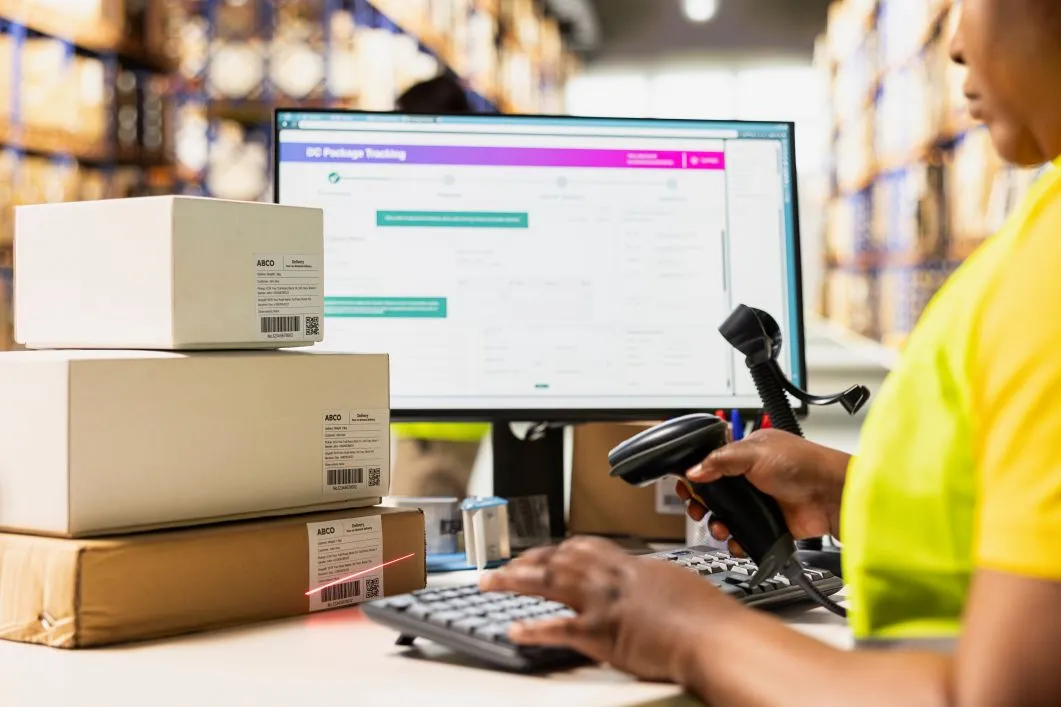
Modern visibility platforms provide real-time shipment tracking throughout every stage of transportation.
According to insights on supply chain visibility and logistics optimization, organizations investing in visibility technologies improve operational efficiency while reducing transportation uncertainty.
Visibility is no longer simply a convenience—it has become an essential requirement for managing international ecommerce operations.
Challenge 7: Sustainability and Environmental Expectations
Sustainability is rapidly becoming a defining factor in international logistics and cross border ecommerce. Governments, investors, and consumers increasingly expect companies to reduce their environmental impact while maintaining efficient supply chains.
Cross border ecommerce businesses are responding by investing in:
- Route optimization
- Shipment consolidation
- Lower-emission transportation
- Sustainable packaging
- Smarter inventory positioning
Multimodal transportation strategies also contribute to sustainability by selecting the most efficient transportation mode for each shipment.
As explored in multimodal freight solutions, combining ocean, air, rail, and trucking services allows businesses to improve operational efficiency while reducing unnecessary transportation emissions.
According to research on global supply chain digital transformation trends, sustainability initiatives are becoming increasingly connected with digital innovation and long-term supply chain resilience.
Businesses that incorporate environmental considerations into logistics planning are strengthening both their operational performance and brand reputation, particularly in the competitive landscape of cross-border ecommerce.
Challenge 8: Digital Transformation and Automation
Technology is changing nearly every aspect of global logistics.
Businesses managing cross border ecommerce operations are increasingly investing in automation to improve efficiency and reduce operational complexity.
Key technologies include:
- Artificial intelligence
- Predictive analytics
- Automated documentation
- Digital customs processing
- Real-time shipment visibility
- Machine learning
These tools enable organizations to make faster decisions while reducing manual processes throughout the supply chain.
As discussed in digital freight forwarding, automation is helping freight forwarders improve transportation planning, shipment visibility, and operational coordination across international logistics networks.
Digital transformation is no longer optional—it has become a necessity for businesses competing in modern global commerce.
Why Freight Forwarders Are More Important Than Ever
The increasing complexity of international logistics has significantly expanded the role of freight forwarders.
Today’s freight forwarders do far more than coordinate transportation.
They help businesses manage:
- Carrier selection
- Customs compliance
- Documentation
- Shipment visibility
- Transportation planning
- Capacity management
- Risk mitigation
Their expertise enables organizations to navigate complex international supply chains while maintaining delivery performance.
Businesses shipping urgent products also benefit from specialized expertise in time sensitive freight, where transportation planning and rapid execution are essential to maintaining operational continuity.
By combining technology with global logistics expertise, freight forwarders help organizations reduce risk while improving supply chain performance.
Why Speed Remains a Competitive Advantage
Customer expectations continue to evolve.
Consumers increasingly expect international orders to arrive almost as quickly as domestic deliveries.
This places tremendous pressure on logistics providers to reduce transportation delays while maintaining cost efficiency.
As explored in ecommerce air freight, air transportation continues to play an important role in supporting high-value, urgent, and time-sensitive shipments.
However, businesses are increasingly combining air transportation with multimodal logistics strategies to achieve the best balance between speed and operational efficiency.
Organizations capable of delivering consistent transit performance gain significant advantages in customer satisfaction and long-term loyalty.
Frequently Asked Questions About Cross Border Ecommerce Logistics
What is the biggest challenge in cross border ecommerce?
The biggest challenge is balancing delivery speed, transportation costs, customs compliance, and customer expectations while maintaining operational efficiency across multiple countries.
Why is logistics so important for international ecommerce?
Logistics directly influences delivery speed, inventory availability, transportation costs, and customer satisfaction, making it one of the most important competitive advantages for global ecommerce businesses.
How can companies reduce cross-border shipping delays?
Businesses can reduce delays by working with experienced freight forwarders, improving customs documentation, using multimodal transportation, and investing in shipment visibility technologies.
Does technology improve cross-border logistics?
Yes. Automation, predictive analytics, AI, and real-time visibility significantly improve operational efficiency while helping businesses respond quickly to disruptions.
Why are freight forwarders essential?
Freight forwarders coordinate transportation, customs compliance, documentation, carrier relationships, and shipment visibility, helping businesses navigate increasingly complex global supply chains, especially in cross border ecommerce.
How LCX Freight Helps Businesses Overcome Cross-Border Challenges
LCX Freight provides integrated logistics solutions designed to simplify international ecommerce operations while improving supply chain performance.
Through its global freight forwarding network and logistics expertise, LCX Freight helps businesses overcome many of the challenges discussed throughout this article.
Core capabilities include:
- International freight forwarding
- Multimodal transportation planning
- Cross-border customs coordination
- Air, ocean, and ground freight solutions
- Real-time shipment visibility
- End-to-end logistics support
By combining technology, operational expertise, and global transportation networks, LCX Freight enables businesses to create supply chains that are more agile, resilient, and scalable for cross border ecommerce.
Organizations seeking long-term international growth benefit from logistics strategies designed around visibility, flexibility, and continuous optimization.
The Future of Cross Border Ecommerce
Cross border ecommerce will continue to evolve as technology, customer expectations, and global trade patterns change.
Several trends are expected to shape the future of international logistics:
- Artificial intelligence in logistics planning
- Automated customs processing
- Expanded digital freight platforms
- Greater supply chain visibility
- Sustainable transportation strategies
- Predictive demand forecasting
Companies that invest in digital logistics capabilities today will be better prepared to compete in tomorrow’s global marketplace.
As discussed in ecommerce demand forecasting, organizations using predictive insights are becoming more responsive, efficient, and resilient in increasingly competitive international markets.
The future belongs to businesses capable of combining technology with operational excellence.
Conclusion
Cross border ecommerce continues to create extraordinary opportunities for businesses seeking international growth. However, expanding globally also introduces increasingly complex logistics challenges that require strategic planning, operational flexibility, and advanced technology.
In the world of cross border ecommerce, organizations must continuously adapt to changing market conditions while meeting rising customer expectations. This involves navigating everything from customs compliance and transportation costs to shipment visibility, sustainability, and automation.
Companies that embrace integrated logistics strategies, leverage experienced freight forwarding partners, and invest in digital transformation will be better positioned to overcome these challenges and compete successfully in the evolving world of global ecommerce.
As cross border ecommerce continues to accelerate, businesses that build resilient, technology-driven, and customer-focused supply chains today will become the leaders of tomorrow’s global marketplace.