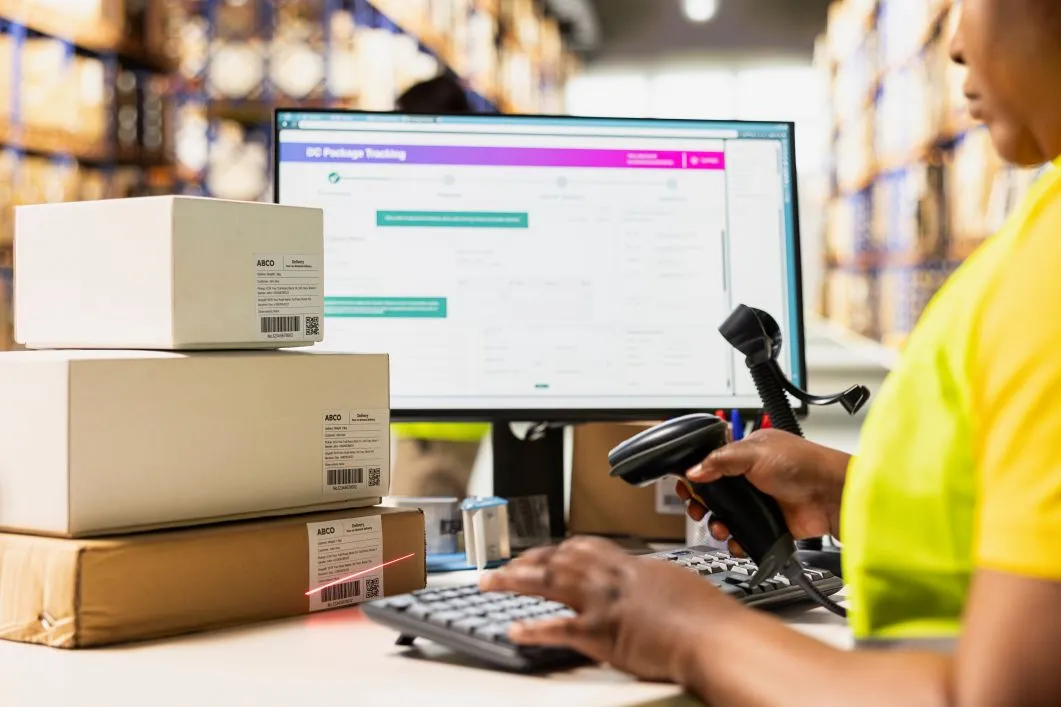
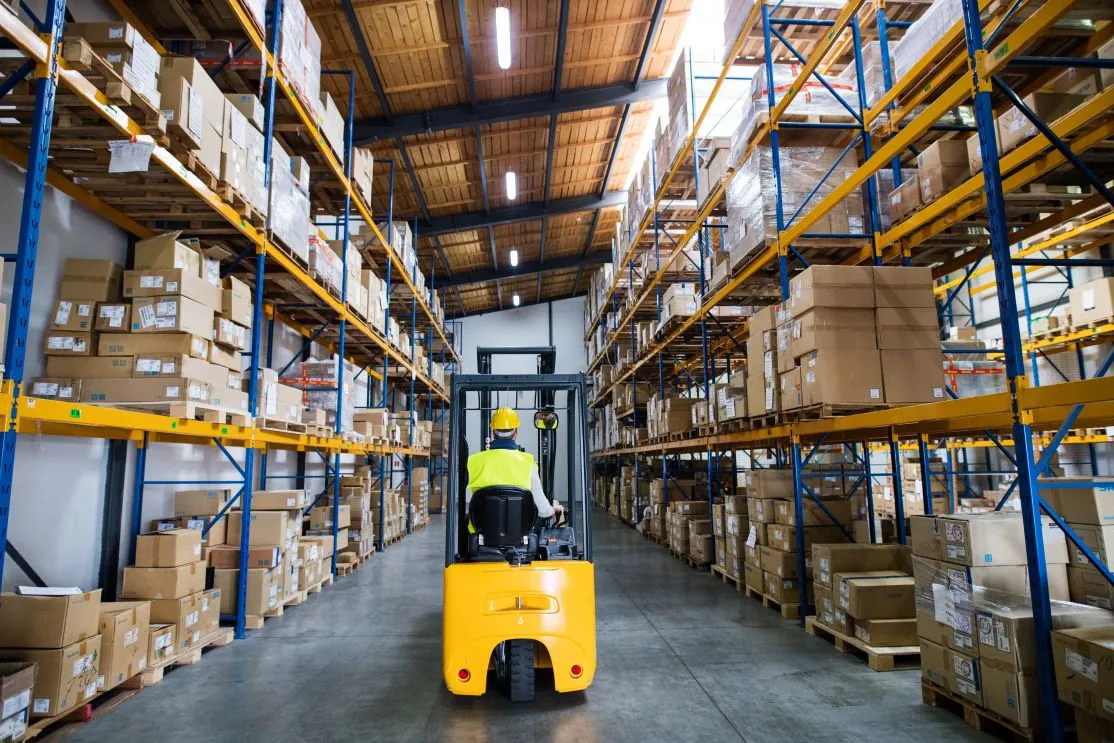
A customer visits an online store, selects a product, clicks “Buy,” and waits for the package to arrive.
From the customer’s perspective, the process appears simple.
Behind that purchase, however, an entire logistics operation begins working to make delivery possible.
The order must be received and validated. Inventory must be available and allocated. Products need to be located inside a warehouse, picked, packed, labeled, transferred to a transportation provider, moved through a distribution network, and ultimately delivered to the customer’s address.
Together, these activities form the order fulfillment process.
For growing ecommerce brands, fulfillment is much more than packing boxes. It connects inventory management, warehousing, technology, transportation, freight forwarding, and final-mile delivery into a single customer experience.
Understanding how that process works—and where delays commonly occur—can help businesses build faster, more accurate, and more scalable ecommerce operations.
What Is Order Fulfillment?
Order fulfillment is the complete process of receiving, preparing, shipping, and delivering a customer’s order.
In ecommerce, the process typically begins when an online order enters the company’s systems and continues until the customer receives the product. If the customer returns the item, reverse logistics can also become part of the fulfillment cycle.
Order fulfillment typically includes:
- Order processing
- Inventory allocation
- Picking
- Packing
- Shipping preparation
- Transportation
- Tracking
- Final-mile delivery
- Returns management
Fulfillment should not be confused with shipping.
Shipping is one stage of order fulfillment. Fulfillment describes the broader process that moves an order from purchase through customer delivery.
For growing businesses, understanding this distinction is important because faster transportation cannot compensate for inefficient inventory or warehouse operations.
The Order Fulfillment Process in 8 Steps
Although fulfillment models vary by business, most ecommerce orders move through eight fundamental stages.
1. Customer Places an Order
The process begins at checkout.
A customer selects products, enters delivery information, chooses a shipping method, completes payment, and submits the order.
The ecommerce platform then communicates that information to the systems responsible for fulfillment.
At this stage, speed and accuracy depend heavily on integration.
If ecommerce platforms, inventory systems, marketplaces, and warehouse systems do not communicate effectively, orders may require manual intervention before fulfillment can begin.
For businesses operating across multiple channels, this becomes even more important.
A brand may receive orders simultaneously from its website, marketplaces, social commerce platforms, and wholesale customers.
As discussed in marketplace vs DTC logistics, multichannel fulfillment requires businesses to keep inventory and order information connected even when sales channels have different requirements.
2. The Order Is Received and Validated
Once an order enters the fulfillment system, the information must be validated.
Systems may verify:
- Payment status
- Customer information
- Shipping address
- Product availability
- Delivery method
- Fulfillment location
When systems are integrated effectively, much of this process can happen automatically.
The order can then be routed to the warehouse or fulfillment center best positioned to process it.
For example, a company operating multiple facilities may assign an order based on inventory availability and proximity to the customer.
This is where technology begins influencing fulfillment speed before anyone physically touches the product.
3. Inventory Is Allocated
An ecommerce platform may show that a product is available, but the fulfillment operation needs to know exactly where that inventory exists.
Once the order is validated, the required products are allocated to that customer.
Accurate inventory visibility is critical.
As discussed in ecommerce inventory management, businesses need reliable information about what inventory is available, where it is stored, and what products are already committed to other orders.
Poor inventory accuracy can lead to:
- Overselling
- Order cancellations
- Stockouts
- Split shipments
- Fulfillment delays
- Customer dissatisfaction
This is why inventory management and order fulfillment cannot operate as separate functions.
A fulfillment system is only as reliable as the inventory information behind it.
4. Products Are Picked
Once inventory has been allocated, warehouse teams or automated systems must retrieve the products from storage.
This stage is known as picking.
Picking can become one of the most time-consuming parts of ecommerce fulfillment because warehouses may contain thousands of products distributed across numerous storage locations.
The layout of the facility therefore matters.
Fast-moving products may be positioned in easily accessible locations, while slower-moving inventory can occupy less strategically important areas.
Technology can also help determine efficient picking routes and reduce unnecessary movement inside the warehouse.
As explored in ecommerce warehousing, the way inventory is positioned and managed inside a facility can directly influence fulfillment speed.
The objective is straightforward: locate the correct product and move it to packing as efficiently and accurately as possible.
5. The Order Is Packed
After picking, products move to packing.
This stage involves more than placing an item inside a box.
Warehouse teams may need to:
- Verify the product
- Select appropriate packaging
- Protect fragile items
- Include documentation
- Apply branding
- Generate shipping labels
- Confirm shipment information
Packaging decisions can influence both customer experience and transportation costs.
Oversized packaging can increase dimensional weight and shipping expenses, while insufficient packaging can increase product damage and returns.
For DTC businesses, packaging may also be an important brand touchpoint.
Marketplace orders, meanwhile, may need to follow specific labeling or packaging requirements established by the platform.
Accuracy at this stage is essential. A fast order delivered with the wrong product is still a fulfillment failure.
Ecommerce Warehousing Is the Engine Behind Fulfillment
Steps three through five—inventory allocation, picking, and packing—depend heavily on warehouse performance.
This is why ecommerce warehousing should be considered part of the customer delivery strategy.
A warehouse with inaccurate inventory, inefficient product locations, slow receiving processes, or disconnected technology can create delays long before transportation begins.
The right warehouse strategy connects:
Inventory → Order → Picking → Packing → Shipping
Warehouse Management Systems (WMS) and Order Management Systems (OMS) can help coordinate these activities and provide greater visibility into fulfillment performance.
Research from Gartner Supply Chain continues to examine the role of technology, data, automation, and digital capabilities in creating more responsive supply-chain operations.
For growing ecommerce businesses, these systems become increasingly important as order volume and operational complexity increase.
Fulfillment Actually Begins Before the Customer Orders
Although the customer-facing order fulfillment process begins at checkout, the logistics required to fulfill that order started much earlier.
The product first had to reach the warehouse.
Inventory may have traveled from an international manufacturer through:
Supplier → Origin Transportation → Freight Forwarding → Customs → Warehouse → Fulfillment
If inventory arrives late, the fulfillment operation cannot ship a product that is not available.
This is where freight forwarding becomes directly connected to ecommerce fulfillment.
Better visibility into inbound transportation allows businesses to understand what inventory is currently available and what products are still moving through the supply chain.
For internationally sourced products, effective fulfillment therefore depends on coordination between inbound freight, inventory planning, and warehouse operations.
What Causes Order Fulfillment Delays?
Fulfillment delays rarely come from one source.
Common causes include:
- Inaccurate inventory
- Stockouts
- Poor warehouse organization
- Manual order processing
- Picking errors
- Insufficient labor
- Packaging bottlenecks
- Missed carrier cutoffs
- Delayed inbound inventory
- Disconnected technology
The most effective way to improve fulfillment is therefore not simply to accelerate one stage.
Businesses need visibility across the complete process.
According to McKinsey & Company’s operations insights, digital technologies, analytics, and automation continue to create opportunities for organizations to improve operational productivity and responsiveness.
For ecommerce brands, better data can help identify exactly where orders are spending unnecessary time.
Faster Fulfillment Requires an End-to-End Strategy
The first half of the order journey demonstrates an important point: fulfillment speed is created by a series of connected decisions.
Inventory must be available.
The order must reach the correct facility.
Products must be easy to locate.
Picking and packing must be efficient.
And the completed shipment must be ready before the appropriate transportation cutoff.
Optimizing only one of these activities may provide limited improvement if another stage remains a bottleneck.
The strongest order fulfillment strategies therefore look at the entire journey—from the inventory entering the logistics network to the package ultimately reaching the customer.
Once the order has been picked, packed, and labeled, the next stage begins: moving that shipment from the fulfillment facility through transportation and final-mile delivery.
6. The Order Enters the Transportation Network
Once an order has been picked, packed, labeled, and prepared for shipment, it leaves the fulfillment operation and enters the transportation network.
This is the point where fulfillment and shipping directly connect.
Depending on the order, transportation may involve:
- Parcel carriers
- Ground transportation
- Air freight
- Regional distribution
- Postal networks
- Local delivery providers
- Multiple transportation modes
The best option depends on factors such as destination, package size, delivery commitment, cost, and customer expectations.
However, transportation speed alone does not determine how quickly an order reaches the customer.
An order processed efficiently but completed after the final carrier pickup may remain at the warehouse until the next shipping cycle. This is why warehouse workflows, carrier schedules, and order cut-off times should be coordinated.
As discussed in ecommerce transit times, businesses should evaluate the complete time required to move an order rather than focusing exclusively on transportation speed.
7. Final-Mile Delivery Connects Fulfillment with the Customer
The final mile is the last physical stage of the order fulfillment process.
After traveling through transportation and distribution networks, the package moves from a local facility or delivery station to the customer’s address.
This stage has an outsized influence on the customer experience because it is the part of the logistics process customers see most directly.
Customers may not know which warehouse stored their product or how inventory was allocated, but they notice whether their package arrives when promised.
Successful final-mile delivery depends on:
- Accurate addresses
- Reliable transportation
- Route efficiency
- Delivery visibility
- Customer communication
- Successful first-attempt delivery
As explored in final-mile delivery, this final stage connects complex logistics operations with the customer experience.
For ecommerce brands, delivery performance can therefore become part of brand performance.
8. Delivery—or a Return—Completes the Fulfillment Cycle
When the package reaches the customer, the outbound order fulfillment process is complete.
But not every order journey ends there.
Customers may need to return or exchange products because of sizing, damage, incorrect items, changing preferences, or other reasons.
Reverse logistics determines what happens next.
A returns process may include:
- Return authorization
- Customer shipment
- Warehouse receiving
- Product inspection
- Inventory disposition
- Restocking, repair, or disposal
- Refund or replacement
Returns should therefore be considered part of the fulfillment strategy rather than an isolated customer-service issue.
Efficient reverse logistics can help businesses recover inventory faster while creating a more convenient customer experience.
What Is the Difference Between Fulfillment and Shipping?
The terms are frequently used interchangeably, but they describe different parts of ecommerce logistics.
Order fulfillment is the complete process of receiving an order, allocating inventory, picking, packing, shipping, delivering, and potentially processing a return.
Shipping is the transportation stage that moves a prepared order from a fulfillment location toward the customer.
In simple terms:
Fulfillment = the complete order journey.
Shipping = one stage within that journey.
This distinction matters because businesses experiencing slow delivery may incorrectly assume they have a carrier problem when the delay actually originates in inventory allocation, warehouse processing, picking, or packing.
Improving customer delivery therefore requires visibility across the complete fulfillment cycle.
How Long Does Order Fulfillment Take?
There is no universal fulfillment time.
Processing may take minutes in highly automated operations or considerably longer when orders require manual handling, customization, complex inventory allocation, or special packaging.
Businesses should separate fulfillment time from transit time.
Fulfillment time measures how long it takes to prepare an order for shipment. Transit time measures how long transportation takes after the shipment enters the carrier network.
Reducing both can improve total order-to-delivery time.
Rather than promising the fastest possible delivery for every order, brands should focus on establishing reliable service levels that customers can understand and the logistics network can consistently achieve.
How a 3PL Supports Order Fulfillment
As ecommerce businesses grow, operating every stage of fulfillment internally can become increasingly difficult.
Warehouse space may become limited. Labor requirements can increase. Technology investments become necessary, and additional sales channels create new inventory and processing requirements.
A third-party logistics provider can allow businesses to outsource some or all of these activities.
A 3PL may support:
- Receiving
- Warehousing
- Inventory management
- Picking and packing
- Order fulfillment
- Transportation coordination
- Marketplace requirements
- Returns
- Distribution
For brands evaluating whether to continue managing these operations internally, an ecommerce 3PL can provide access to existing logistics infrastructure without requiring the business to build every capability itself.
The objective is not simply to outsource warehouse work. It is to create a fulfillment operation capable of scaling alongside order volume.
International Order Fulfillment Adds Another Layer
International ecommerce makes the fulfillment journey more complex because inventory and customers may be located in different countries.
Businesses generally need to determine whether they should fulfill international orders directly from a central location or position inventory closer to demand in destination markets.
The process may involve:
Manufacturer → Freight Forwarding → Customs → Regional Warehouse → Order Fulfillment → Final-Mile Delivery
For brands selling internationally, cross-border fulfillment connects transportation, customs, warehousing, inventory, and customer delivery.
This is why freight forwarding becomes particularly important.
If inbound inventory is delayed internationally, downstream fulfillment can be disrupted even when warehouse operations are performing efficiently.
A connected logistics strategy gives businesses greater visibility from supplier transportation through customer delivery.
Measuring Order Fulfillment Performance
Businesses cannot improve fulfillment consistently without measuring it.
Useful performance indicators can include:
- Order processing time
- Picking accuracy
- Order accuracy
- Inventory accuracy
- On-time shipment rate
- Fulfillment cost per order
- Average transit time
- On-time delivery
- Return rate
No single metric provides a complete picture.
For example, reducing processing time provides little value if order accuracy declines. Similarly, minimizing inventory may lower carrying costs while increasing stockouts.
The strongest fulfillment strategies balance speed, accuracy, cost, inventory availability, and customer experience.
Frequently Asked Questions About Order Fulfillment
What is order fulfillment?
Order fulfillment is the complete process of receiving an order, allocating inventory, picking and packing products, shipping the order, and delivering it to the customer. Returns may also form part of the fulfillment cycle.
What are the main steps in order fulfillment?
The primary stages are order placement, validation, inventory allocation, picking, packing, shipping, final-mile delivery, and delivery or returns processing.
What is the difference between fulfillment and shipping?
Fulfillment covers the complete order process. Shipping specifically refers to moving a prepared shipment through the transportation network toward the customer.
How does inventory management affect order fulfillment?
Accurate inventory management helps fulfillment systems determine whether products are available and where they are located. Poor inventory visibility can cause stockouts, cancellations, split shipments, and delays.
What is a 3PL fulfillment provider?
A 3PL is a third-party logistics provider that can manage services such as warehousing, inventory, picking, packing, fulfillment, transportation, and distribution on behalf of another business.
How does international order fulfillment work?
International fulfillment can involve cross-border transportation, customs, regional warehousing, inventory management, order processing, and final-mile delivery. The exact model depends on where inventory is stored relative to the customer.
How LCX Freight Connects the Fulfillment Journey
LCX Freight helps ecommerce businesses connect the logistics activities surrounding order fulfillment, from inbound inventory transportation through warehousing, distribution, and delivery networks.
Capabilities can include:
- International freight forwarding
- Air and ocean freight
- Multimodal transportation
- Warehousing
- Ecommerce fulfillment
- Inventory coordination
- Customs brokerage support
- International distribution
- Shipment visibility
This integrated approach is particularly valuable when inventory originates internationally.
Instead of viewing freight forwarding, warehousing, and fulfillment as independent operations, businesses can manage them as connected stages of the same supply chain.
Greater continuity can improve visibility into what inventory is available, what is arriving, and how products should move through fulfillment as customer demand changes.
The Future of Order Fulfillment
Order fulfillment is becoming increasingly automated, connected, and predictive.
The World Economic Forum continues to examine how technologies including artificial intelligence, automation, and digitalization are influencing global supply chains.
For ecommerce fulfillment, these technologies can support capabilities such as:
- Automated order routing
- Real-time inventory visibility
- AI-assisted demand forecasting
- Warehouse automation
- Predictive replenishment
- Smarter inventory placement
- Transportation optimization
- End-to-end shipment visibility
The next stage of fulfillment will not simply be about processing orders faster.
It will increasingly involve predicting where inventory should be positioned and identifying potential disruptions before they affect customer orders.
Conclusion
A customer’s online purchase may take only seconds, but fulfilling that order depends on an entire network of logistics activities working together.
From checkout and inventory allocation through picking, packing, transportation, final-mile delivery, and returns, every stage can influence speed, accuracy, cost, and customer satisfaction.
Successful order fulfillment therefore requires more than an efficient warehouse or a fast carrier.
It requires coordination between inventory management, ecommerce warehousing, technology, 3PL operations, freight forwarding, transportation, and final-mile delivery.
For growing ecommerce businesses, understanding the complete fulfillment journey makes it easier to identify where delays occur and where logistics investments can create the greatest value.
When those activities operate as one connected strategy, order fulfillment becomes more than an operational process. It becomes infrastructure for scalable ecommerce growth.