


Ecommerce warehousing is the foundation of fast, reliable fulfillment — long before a package ever leaves the warehouse. It starts with where inventory is stored, how accurately it is tracked, how efficiently it moves through a facility, and how quickly teams can prepare orders for shipment.
As ecommerce businesses grow, warehousing becomes much more than a place to store products.
The right ecommerce warehousing strategy connects inventory management, order processing, fulfillment, transportation, and customer delivery. When these activities work together, businesses can shorten processing times, improve inventory accuracy, reduce unnecessary transportation costs, and respond more effectively to changing demand.
The opposite is also true. Poor inventory placement, inefficient receiving processes, inaccurate stock data, or warehouses located far from customer demand can create delays before an order even reaches the transportation network.
This is why growing ecommerce brands should view warehousing as part of their fulfillment strategy—not simply as a storage expense.
What Is Ecommerce Warehousing?
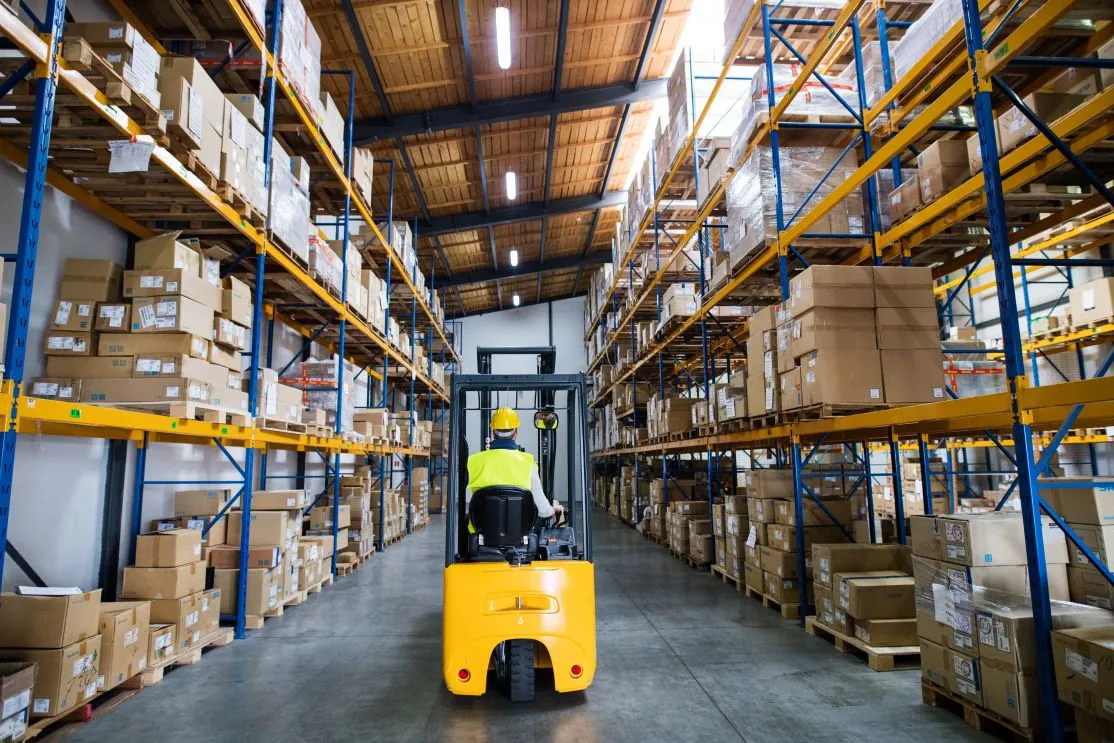
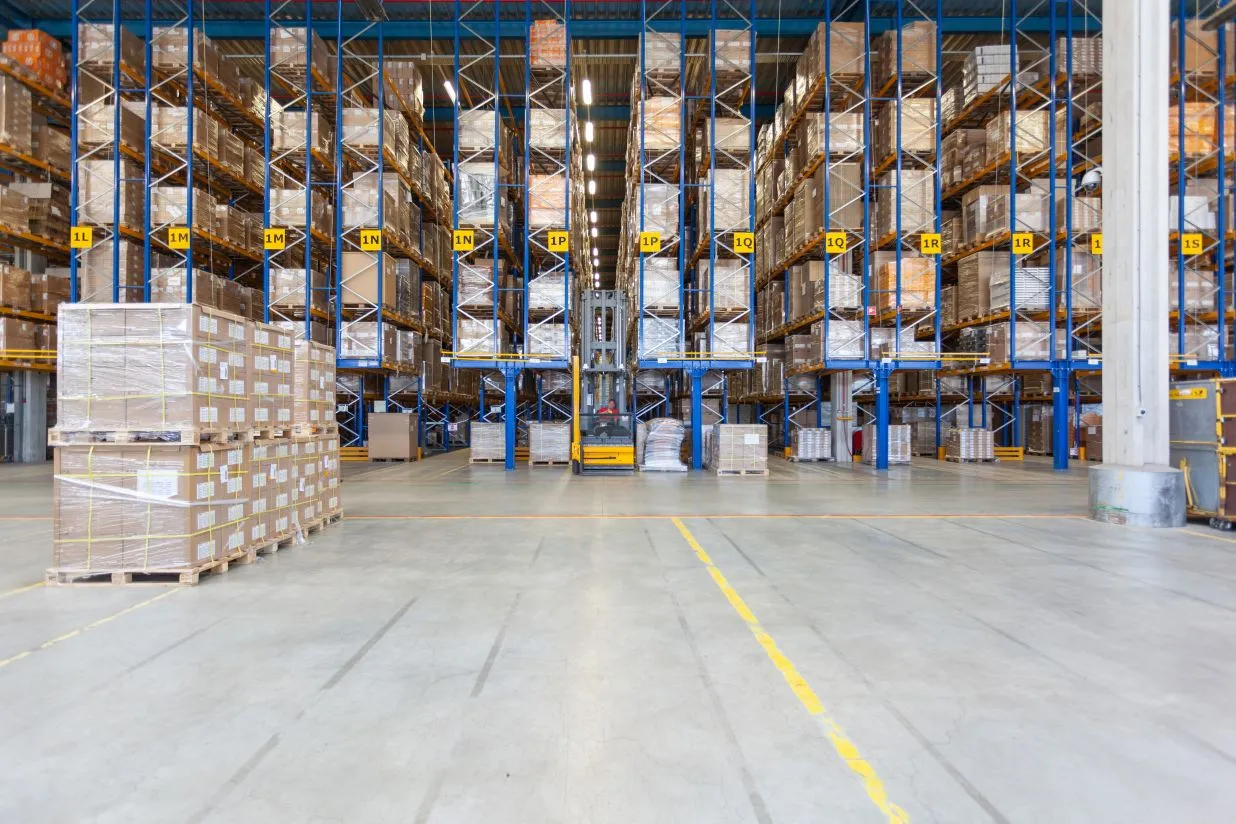
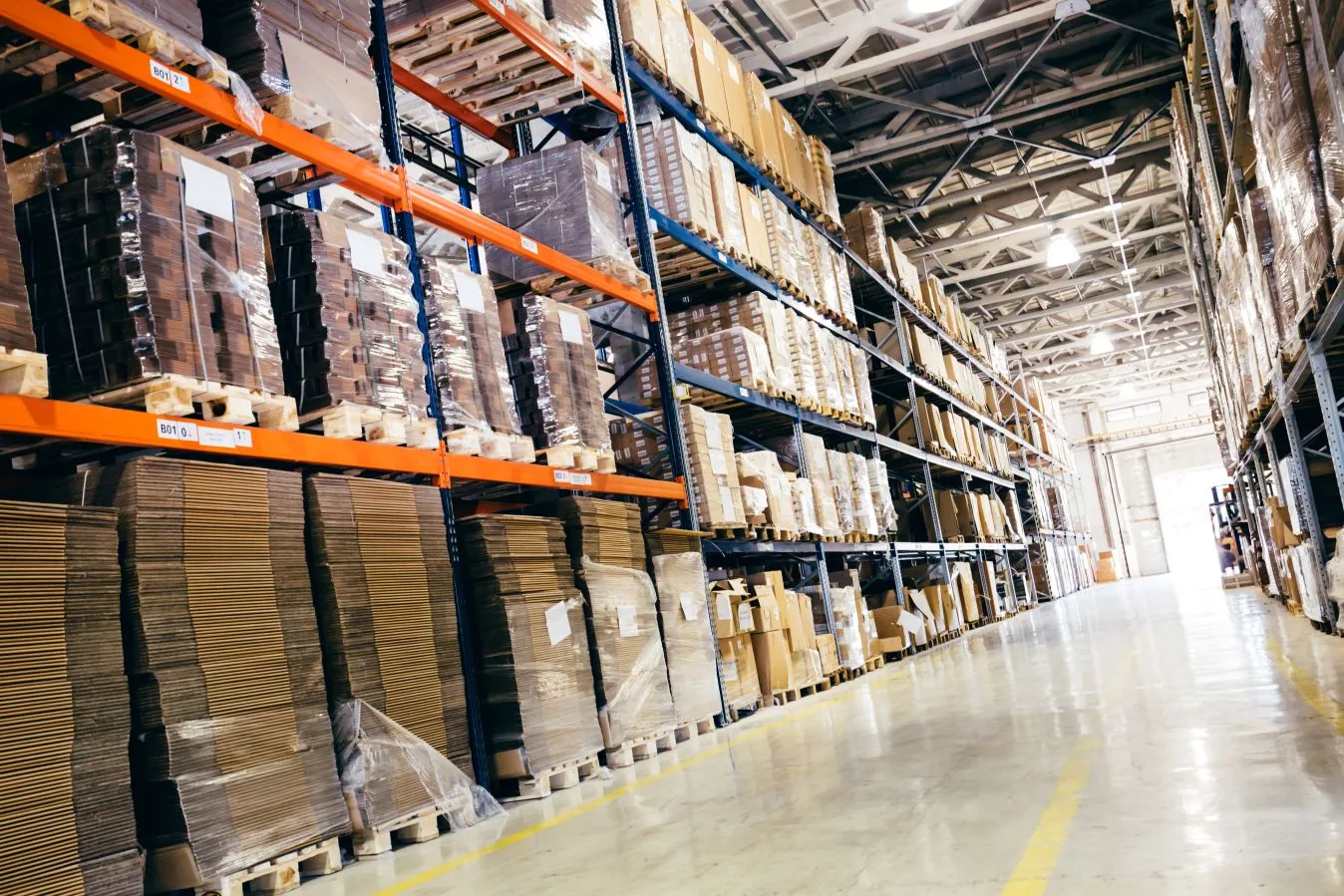
Ecommerce warehousing is the process of receiving, storing, managing, and preparing inventory specifically for online order fulfillment.
Unlike traditional warehouse environments that may primarily handle pallets or large wholesale shipments, ecommerce operations often process large numbers of individual orders containing relatively small quantities of products.
An ecommerce warehouse may therefore support:
- Inventory receiving
- Product storage
- Inventory tracking
- Picking and packing
- Marketplace orders
- DTC orders
- Shipping preparation
- Returns processing
- Inventory replenishment
The objective is to move products efficiently from inbound inventory to customer orders.
As discussed in ecommerce fulfillment vs traditional warehousing, modern ecommerce facilities must support rapid inventory movement and order processing rather than storage alone.
That distinction becomes increasingly important as order volumes and customer expectations grow.
How Does Warehousing Affect Fulfillment Speed?
Fulfillment speed is often associated with transportation.
Businesses may assume that faster delivery simply requires using a faster carrier or transportation service.
But transportation is only one component of total order time.
Before a shipment begins its final journey, the order must typically be:
- Received by the fulfillment system.
- Allocated to available inventory.
- Sent to the appropriate warehouse.
- Picked from storage.
- Packed correctly.
- Labeled and prepared for shipment.
- Transferred into the transportation network.
Delays at any of these stages increase the total time between purchase and delivery.
A well-designed ecommerce warehousing strategy reduces friction before transportation begins.
This is especially important as online retail continues to represent a significant share of overall commerce. The U.S. Census Bureau tracks ecommerce activity as an important component of retail sales, reinforcing the need for logistics infrastructure capable of supporting digital purchasing behavior at scale.
5 Ways Warehousing Strategy Can Accelerate Fulfillment
1. Position Inventory Closer to Customer Demand
Warehouse location directly influences how far orders must travel.
If most of your ecommerce warehousing is located thousands of miles from your core customer base, even the most efficient operations will struggle to deliver orders quickly and affordably.
Strategic inventory placement can reduce the distance between products and customers.
Businesses may choose between:
- A centralized warehouse
- Regional distribution centers
- Multiple fulfillment facilities
- A third-party logistics network
The right configuration depends on order volume, customer geography, inventory characteristics, and transportation costs.
The objective is not simply to add more warehouses. Each location should improve the efficiency of the broader fulfillment network.
2. Improve Inventory Visibility
Fast fulfillment depends on knowing exactly what inventory is available and where it is located.
Poor inventory accuracy can cause orders to be routed to locations that do not actually have the required products.
This can result in:
- Order cancellations
- Split shipments
- Processing delays
- Emergency replenishment
- Stockouts
- Higher transportation costs
Strong ecommerce inventory management helps connect warehouse operations with real-time product availability.
Instead of viewing inventory as a single total number, growing ecommerce businesses need visibility across warehouses, fulfillment centers, marketplace inventory, and products currently moving through the supply chain. With the right ecommerce warehousing strategy, businesses can gain a clearer picture of their stock at every stage.
3. Optimize Receiving and Putaway
Warehouse efficiency begins when inventory arrives—not when a customer places an order.
Inbound shipments must be received, verified, entered into inventory systems, and moved into the correct storage locations.
If this process is slow, products may physically be inside a warehouse but remain unavailable for customer orders.
Efficient receiving and putaway processes help shorten the time between inventory arrival and inventory availability.
This becomes particularly important in ecommerce warehousing during seasonal peaks, major product launches, or large replenishment cycles when facilities may receive significant volumes within short periods.
4. Organize Inventory Around Order Behavior
Not every product should necessarily occupy the same type of warehouse location.
High-demand products can often be positioned in areas that are faster for warehouse teams or automated systems to access.
Slower-moving inventory can occupy less strategically important storage areas.
This approach can reduce travel time during picking and improve overall order processing.
Demand data becomes particularly valuable here.
As explored in ecommerce demand forecasting, businesses can use historical and current demand signals to anticipate which products are likely to require replenishment.
Those insights can also influence where inventory should be positioned inside the warehouse.
5. Connect Warehousing with Transportation
Warehouse operations and transportation should not function as isolated processes.
Ecommerce warehousing operations — including order cut-off times, carrier pickups, transportation schedules, and warehouse processing capacity — all play a key role in how quickly a completed order enters the delivery network.
For example, an order packed shortly after the final carrier pickup of the day may remain in the warehouse until the following shipping cycle.
Coordinating fulfillment workflows with transportation schedules can reduce this idle time.
The same principle applies to inbound freight.
Better coordination between freight forwarding and warehouse receiving allows teams to prepare for incoming inventory and prioritize critical replenishment.
Centralized vs Distributed Ecommerce Warehousing
One of the biggest strategic questions growing ecommerce businesses face is whether inventory should remain centralized or be distributed across multiple locations.
A centralized warehousing strategy keeps most inventory within one primary facility.
Potential advantages include:
- Simpler inventory management
- Fewer facilities
- Lower operational complexity
- Easier inventory consolidation
However, orders may need to travel farther to reach customers.
A distributed warehousing strategy places inventory across multiple facilities closer to different customer markets.
Potential advantages include:
- Shorter shipping distances
- Faster regional fulfillment
- Greater geographic coverage
- Improved flexibility
The trade-off is greater inventory complexity.
Businesses must determine how much inventory should be positioned at each facility and continuously rebalance products as demand changes.
Research and insights from Gartner Supply Chain regularly examine how planning, technology, data, and network design influence modern supply chain performance.
For ecommerce businesses, the right warehouse network should balance customer service with inventory and operating costs.
Marketplace and DTC Growth Changes Warehouse Requirements
Warehousing becomes more complex when businesses sell through both marketplaces and their own DTC channels.
Ecommerce warehousing for marketplace replenishment may require larger quantities of inventory to be prepared according to specific platform requirements, while ecommerce warehousing for DTC fulfillment may involve picking and packing individual customer orders.
The same facility may therefore need to support multiple fulfillment workflows.
As discussed in marketplace vs DTC logistics, multichannel growth works best when inventory remains connected even when fulfillment requirements differ.
Without that visibility, one sales channel may experience a stockout while another location holds excess inventory.
A scalable ecommerce warehousing strategy should help businesses coordinate these inventory pools across all sales channels. Without a unified ecommerce warehousing approach, every channel risks becoming an isolated logistics operation, leading to inefficiencies and increased costs.
Warehousing Should Scale Before It Becomes a Bottleneck
One of the most common mistakes growing ecommerce businesses can make is waiting until warehouse capacity is already overwhelmed before changing their strategy.
Warning signs may include increasing order-processing times, limited storage space, inventory discrepancies, growing labor requirements, and difficulty handling seasonal peaks.
At that point, the business may need to decide whether to expand internal facilities or outsource part of its logistics operation.
A third-party logistics strategy can provide access to established warehousing and fulfillment infrastructure without requiring the brand to build every capability internally.
For growing ecommerce companies, this decision should not be based only on warehouse cost.
The more important question is whether your ecommerce warehousing strategy can continue supporting faster fulfillment as products, orders, channels, and geographic markets expand.
Technology Makes Ecommerce Warehousing More Efficient
As ecommerce operations scale, warehouse technology becomes increasingly important.
Manual processes may work when order volumes are low, but growing businesses need systems capable of coordinating inventory, orders, warehouse activity, and transportation across increasingly complex logistics networks.
A Warehouse Management System (WMS) can help businesses manage:
- Inventory locations
- Receiving and putaway
- Picking workflows
- Order priorities
- Packing operations
- Inventory accuracy
- Returns
- Warehouse performance
When a WMS connects with an Order Management System (OMS), ecommerce platforms, marketplaces, and transportation systems, businesses gain a more complete view of the fulfillment process.
Technology can also help determine which warehouse should fulfill a particular order based on inventory availability, customer location, delivery requirements, and transportation options.
According to McKinsey & Company’s operations research, automation, analytics, and digital technologies continue to influence how businesses improve productivity and build more responsive operations.
For ecommerce warehousing, technology helps transform individual facilities into connected components of a broader fulfillment network.
Automation Can Reduce Order Processing Time
Warehouse automation does not necessarily mean replacing every manual process with robotics.
Automation can begin with relatively simple improvements, including barcode scanning, automated inventory updates, order routing, replenishment alerts, and optimized picking instructions.
Larger operations may introduce:
- Automated sorting
- Conveyor systems
- Pick-to-light technology
- Automated storage and retrieval systems
- Robotics
- AI-assisted inventory planning
The appropriate level of automation depends on order volume, product characteristics, facility design, and investment requirements.
The goal should not be automation for its own sake.
Technology should remove bottlenecks, reduce errors, and shorten the time required to move inventory from storage into customer orders.
3PL Warehousing Can Support Faster Growth
Not every ecommerce company needs to operate its own warehouse network.
As order volumes increase, businesses must consider the cost of additional warehouse space, labor, equipment, technology, and management.
For some brands, outsourcing warehousing and fulfillment to a third-party logistics provider can offer a more scalable alternative.
An ecommerce 3PL may provide access to:
- Warehouse infrastructure
- Inventory management systems
- Fulfillment operations
- Transportation networks
- Marketplace support
- Returns management
- Regional distribution
This allows brands to expand logistics capacity without building every facility or operational capability internally.
However, outsourcing should not mean losing control over inventory.
The right 3PL relationship should provide accurate visibility into stock levels, inbound inventory, fulfillment activity, and outbound shipments.
For growing businesses, the decision ultimately comes down to whether internal warehousing remains an advantage or has started becoming a constraint on growth.
Freight Forwarding and Warehousing Should Work Together
For brands sourcing internationally, warehouse performance begins before inventory reaches the facility.
Products may first move from manufacturers through international freight forwarding, customs clearance, and inland transportation before arriving at a distribution center.
If inbound transportation and warehouse operations are poorly coordinated, delays can occur during receiving and replenishment.
Better integration allows warehouse teams to understand:
- What inventory is arriving
- When shipments are expected
- Which products require priority receiving
- Which orders depend on inbound stock
- Whether inventory shortages are developing
As explored in digital freight forwarding, greater transportation visibility can provide businesses with better information about inventory moving through international supply chains.
This creates an important connection between freight forwarding and ecommerce warehousing.
Inventory that is still in transit should not be invisible to the fulfillment strategy.
When businesses understand what is available today and what is arriving next, they can make better replenishment and order-planning decisions.
Cross-Border Ecommerce Requires Strategic Warehouse Placement
International expansion introduces another warehouse decision: should orders ship internationally from one central location, or should inventory be positioned closer to customers in destination markets?
There is no universal answer.
Direct cross-border fulfillment may work well when international order volumes are relatively low or products are specialized.
As demand grows within a market, regional inventory placement may become more attractive.
Strategically positioning inventory can potentially reduce international delivery times and create more predictable fulfillment experiences.
As discussed in cross border fulfillment, international ecommerce requires businesses to connect transportation, customs, inventory, warehousing, and customer delivery rather than managing each activity independently.
Warehouse location therefore becomes part of the international expansion strategy.
When it comes to ecommerce warehousing, a facility should never be selected simply because space is available. Its location should support suppliers, transportation infrastructure, customs processes, customer demand, and distribution requirements.
Faster Fulfillment Does Not Always Require More Warehouses
It can be tempting to assume that adding fulfillment centers automatically produces faster delivery.
But more locations also mean more inventory must be distributed and managed.
If demand forecasting is inaccurate, a business may have the correct product in its network—but in the wrong warehouse.
This can result in inventory transfers, split shipments, excess stock, and additional transportation expenses.
The best network is therefore not necessarily the largest.
It is the one that positions the right inventory in the right locations based on actual customer demand.
Businesses should evaluate warehouse expansion using factors such as:
- Order concentration by region
- Delivery expectations
- Transportation costs
- Product velocity
- Inventory carrying costs
- Seasonal demand
- Supplier locations
This allows warehouse strategy to grow based on operational requirements rather than assumptions about speed.
Frequently Asked Questions About Ecommerce Warehousing
What is ecommerce warehousing?
Ecommerce warehousing is the process of receiving, storing, managing, and preparing inventory specifically for online order fulfillment. It connects inventory storage with picking, packing, shipping, returns, and replenishment.
How does warehousing affect fulfillment speed?
Warehouse location, inventory accuracy, product organization, picking efficiency, order processing, and carrier coordination all influence how quickly an order can leave a facility and begin transportation to the customer.
What is the difference between ecommerce and traditional warehousing?
Ecommerce warehousing differs from traditional warehousing in several key ways. While traditional warehousing focuses primarily on storing and moving inventory in larger quantities, ecommerce warehousing is designed to support high volumes of smaller customer orders, rapid inventory movement, picking and packing, and direct fulfillment.
Where should ecommerce inventory be stored?
Inventory should be positioned according to customer demand, transportation access, fulfillment requirements, product velocity, and operating costs. High-volume businesses may benefit from distributing inventory across strategically located facilities.
Does a 3PL provide ecommerce warehousing?
Many 3PL providers offer warehousing alongside inventory management, order fulfillment, transportation, returns, and distribution services. Capabilities vary, so businesses should evaluate whether a provider can support their specific ecommerce requirements.
How can warehouse location reduce delivery times?
Warehousing inventory closer to major customer markets can reduce transportation distance after fulfillment, potentially enabling faster and more economical regional delivery.
What technology is used in ecommerce warehouses?
Common technologies include Warehouse Management Systems (WMS), Order Management Systems (OMS), barcode and scanning systems, inventory platforms, transportation integrations, automation, and analytics tools.
How LCX Freight Connects Warehousing with Ecommerce Logistics
LCX Freight helps businesses connect warehousing with the broader logistics activities required to move inventory from suppliers to customers.
Capabilities can include:
- Warehousing
- Ecommerce fulfillment
- Inventory coordination
- International freight forwarding
- Air and ocean freight
- Multimodal transportation
- Customs brokerage support
- International distribution
- Shipment visibility
This integrated approach is particularly valuable for businesses whose inventory moves through international supply chains before reaching fulfillment facilities.
Rather than treating the warehouse as the final destination of an inbound shipment, it becomes a strategic point within a continuous logistics network.
That connection can help businesses coordinate inbound inventory, fulfillment requirements, and outbound distribution more effectively.
The Future of Ecommerce Warehousing
The ecommerce warehouse is becoming increasingly connected, data-driven, and responsive.
The World Economic Forum continues to examine how digital technologies and changing global supply chains are reshaping commerce and logistics.
For ecommerce businesses, future warehouse strategies are likely to place greater emphasis on:
- Real-time inventory visibility
- AI-assisted demand forecasting
- Automated order routing
- Predictive replenishment
- Warehouse automation
- Distributed inventory
- Integrated transportation data
- Flexible 3PL networks
AI and predictive analytics may also help businesses determine not only how much inventory they need, but where that inventory should be positioned before demand occurs.
This moves ecommerce warehousing from a reactive function toward a more predictive role within the supply chain.
Conclusion
Faster ecommerce fulfillment does not begin with the final-mile carrier. It begins with the warehouse strategy behind every order.
Where inventory is positioned, how accurately it is tracked, how quickly inbound products become available, how efficiently orders are picked and packed, and how effectively warehouses connect with transportation can all influence fulfillment performance.
The right ecommerce warehousing strategy brings these elements together.
For some businesses, that may mean optimizing a centralized facility. For others, it may involve distributed inventory, greater automation, or outsourcing operations to a 3PL. International brands may also need to connect warehousing more closely with freight forwarding and cross-border fulfillment.
The objective is not simply to store products closer to customers or add more warehouse locations.
It is to create a logistics network that positions inventory where demand exists and moves orders through fulfillment with as little friction as possible.
When ecommerce warehousing, inventory management, fulfillment, and freight forwarding operate as a connected strategy, growing brands can improve delivery performance while building a logistics infrastructure capable of supporting their next stage of growth.