




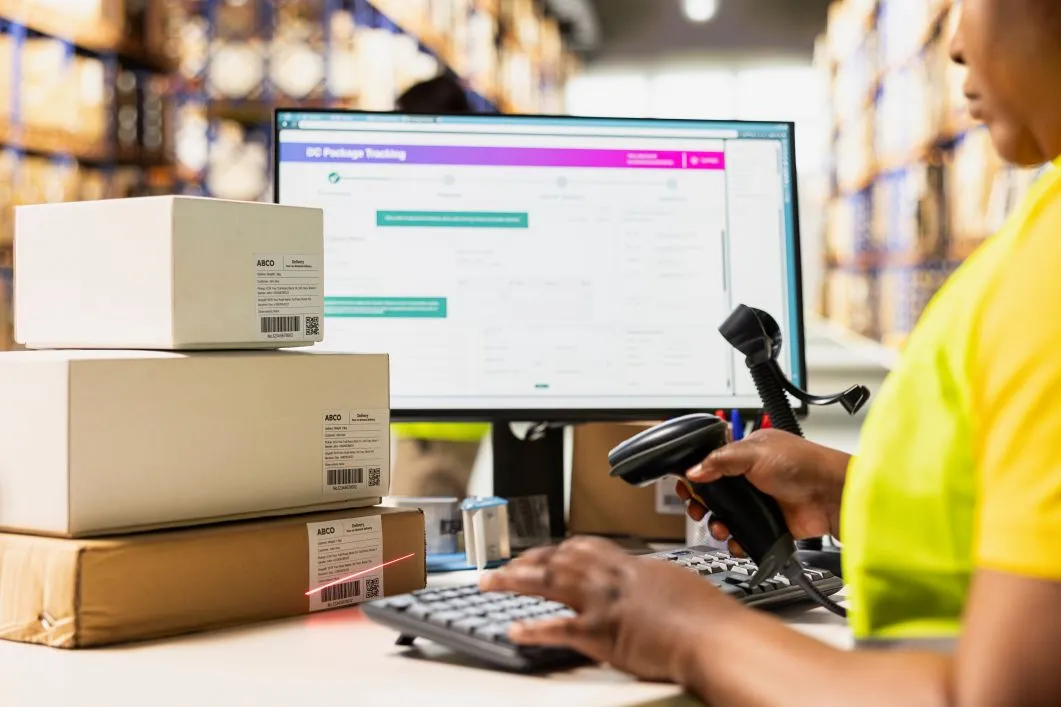

Artificial intelligence is rapidly transforming industries around the world, and logistics is no exception. What was once considered a technology reserved for large enterprises has become an essential competitive advantage for businesses of every size. For online retailers operating in increasingly demanding global markets, AI freight forwarding is reshaping how shipments are planned, managed, and delivered.
Modern freight forwarding is no longer limited to booking cargo space and coordinating transportation. Today’s freight forwarding providers are expected to deliver real-time visibility, predictive insights, automated documentation, and optimized transportation strategies that help ecommerce businesses compete on a global scale.
In 2026, online retailers face growing customer expectations for faster deliveries, greater shipment transparency, and lower transportation costs. AI freight forwarding is enabling companies to meet these expectations by improving operational efficiency while reducing manual processes throughout the supply chain.
As ecommerce continues to expand internationally, AI freight forwarding is becoming one of the most important innovations driving the future of global logistics.
Why Artificial Intelligence Is Reshaping Freight Forwarding
The rapid growth of ecommerce has dramatically increased the complexity of global supply chains.
According to global ecommerce sales growth trends, international online retail continues to expand, creating greater demand for faster, more intelligent logistics solutions.
Traditional freight forwarding relies heavily on manual communication, spreadsheets, emails, and reactive decision-making. While these methods have supported international trade for decades, they often struggle to keep pace with today’s dynamic logistics environment.
AI freight forwarding introduces a new level of automation that enables freight forwarding providers to analyze vast amounts of operational data in real time.
Instead of reacting to disruptions after they occur, AI allows freight forwarding professionals to anticipate problems before they affect shipments.
This shift from reactive logistics to predictive logistics is fundamentally changing how modern freight forwarding operates.
As explored in digital freight forwarding, automation is helping logistics providers eliminate manual processes while improving shipment visibility across global supply chains.
What Is AI Freight Forwarding?
AI freight forwarding refers to the use of artificial intelligence technologies to improve decision-making, automate workflows, and optimize logistics operations throughout the freight forwarding process.
Rather than replacing logistics professionals, artificial intelligence enhances freight forwarding by providing better insights, faster analysis, and improved operational efficiency.
Some of the most common AI applications include:
- Predictive shipment planning
- Automated documentation
- Intelligent route optimization
- Carrier performance analysis
- Customs compliance assistance
- Demand forecasting
- Real-time disruption alerts
These capabilities enable freight forwarding providers to deliver faster, more reliable, and more cost-effective logistics services for online retailers.
Why Online Retailers Benefit from AI Freight Forwarding
Ecommerce businesses operate in one of the most competitive industries in the world.
Customers expect rapid fulfillment, accurate delivery estimates, and complete shipment visibility regardless of where products originate.
AI freight forwarding helps online retailers meet these expectations by improving logistics performance across every stage of the supply chain.
Key benefits include:
- Faster shipment planning
- Improved transportation decisions
- Better inventory coordination
- Reduced shipping delays
- Lower logistics costs
- Enhanced customer communication
As discussed in ecommerce logistics services, technology has become one of the most important competitive advantages in modern global fulfillment.
Retailers working with freight forwarding partners that leverage AI can respond more quickly to market changes while improving customer satisfaction.
Predictive Analytics Is Transforming Freight Forwarding
One of the most valuable capabilities of artificial intelligence is predictive analytics.
Instead of relying solely on historical reports, AI freight forwarding systems continuously analyze current market conditions to forecast future logistics requirements.
Freight forwarding providers use predictive analytics to evaluate:
- Carrier capacity
- Transportation demand
- Weather disruptions
- Port congestion
- Seasonal shipping trends
- Inventory requirements
These insights allow freight forwarding professionals to make smarter transportation decisions before disruptions occur.
Companies improving ecommerce demand forecasting are increasingly using artificial intelligence to predict inventory needs and transportation demand more accurately.
For online retailers, this means fewer stockouts, faster replenishment, and more efficient fulfillment operations.
AI Improves Shipment Visibility
Visibility has become one of the defining characteristics of modern freight forwarding.
Customers no longer accept limited shipment updates.
They expect continuous access to transportation status from origin to final delivery.
Artificial intelligence helps freight forwarding companies improve visibility by monitoring shipment data across multiple transportation networks simultaneously.
According to insights on supply chain visibility and logistics optimization, organizations investing in visibility technologies improve operational responsiveness and customer satisfaction.
AI systems automatically detect anomalies such as transportation delays, weather disruptions, customs bottlenecks, or unexpected route deviations.
Instead of waiting for problems to escalate, freight forwarding teams receive alerts early enough to implement corrective actions.
This proactive approach significantly improves delivery reliability for ecommerce businesses.
Smarter Route Optimization Through Artificial Intelligence
Transportation planning has traditionally depended on human experience and historical knowledge.
Artificial intelligence allows freight forwarding providers to optimize routing decisions using real-time operational data.
AI evaluates variables including:
- Weather conditions
- Traffic patterns
- Port congestion
- Airport capacity
- Carrier reliability
- Transit schedules
Organizations focused on improving ecommerce transit times are increasingly leveraging AI to reduce delays while improving transportation efficiency.
For freight forwarding companies, this results in faster deliveries, lower transportation costs, and greater operational flexibility.
AI Is Improving Customs Compliance
One of the most complex aspects of international freight forwarding is customs compliance. Every country maintains its own import regulations, documentation requirements, tariff classifications, and inspection procedures. Even minor documentation errors can delay shipments, increase costs, and negatively impact customer satisfaction.
Artificial intelligence is helping freight forwarding providers streamline customs processes by validating documentation, identifying inconsistencies, and reducing manual data entry.
AI-powered systems can automatically review:
- Commercial invoices
- Packing lists
- Harmonized System (HS) codes
- Shipping instructions
- Customs declarations
By identifying potential issues before shipments leave the origin, freight forwarding companies can reduce customs delays and improve overall transportation efficiency.
According to the World Customs Organization, digital customs modernization continues to play a critical role in improving international trade efficiency and supply chain resilience.
For online retailers shipping internationally, this translates into fewer delays and a more consistent customer experience.
AI Helps Reduce Freight Costs
Transportation costs continue to fluctuate due to fuel prices, capacity constraints, seasonal demand, and global economic conditions.
AI freight forwarding allows providers to analyze thousands of transportation variables simultaneously, helping businesses make more informed logistics decisions.
AI supports freight cost optimization by:
- Selecting the most efficient carrier
- Identifying optimal shipping routes
- Improving container utilization
- Reducing empty miles
- Forecasting transportation demand
- Optimizing shipment consolidation
As discussed in freight cost optimization, reducing logistics costs is not simply about choosing the cheapest carrier—it involves improving efficiency across the entire supply chain.
AI enables freight forwarding professionals to achieve this balance while maintaining high service levels for ecommerce businesses.
AI and Cross-Border Freight Forwarding
International ecommerce introduces additional complexity because shipments must move through multiple transportation providers, customs agencies, and regulatory environments—making the role of AI freight forwarding more critical than ever.
Artificial intelligence is helping freight forwarding providers coordinate these operations with greater speed and accuracy.
Businesses expanding through cross border logistics increasingly depend on AI to manage:
- International routing
- Customs documentation
- Shipment prioritization
- Carrier coordination
- Regulatory compliance
- Delivery forecasting
Rather than manually monitoring every shipment, freight forwarding professionals can rely on AI-generated recommendations that improve operational efficiency while reducing human error.
This capability is becoming increasingly valuable as ecommerce businesses expand into multiple international markets simultaneously.
AI Supports Multimodal Freight Forwarding
Modern freight forwarding rarely relies on a single transportation mode.
International shipments often combine:
- Air freight
- Ocean freight
- Rail transportation
- Ground transportation
Artificial intelligence helps freight forwarding providers determine the most effective transportation combination based on:
- Delivery urgency
- Cost objectives
- Capacity availability
- Weather conditions
- Port congestion
- Customer expectations
As explored in multimodal freight solutions, integrating multiple transportation modes creates greater flexibility while improving supply chain resilience.
AI freight forwarding enhances these multimodal strategies by continuously evaluating transportation performance and recommending adjustments when conditions change.
This enables freight forwarding companies to respond quickly to disruptions while maintaining delivery commitments.
Frequently Asked Questions About AI Freight Forwarding
What is AI freight forwarding?
AI freight forwarding refers to the use of artificial intelligence to automate logistics processes, improve transportation planning, enhance shipment visibility, and optimize freight forwarding operations.
Will AI replace freight forwarders?
No. AI is designed to support freight forwarding professionals rather than replace them. It automates repetitive tasks while allowing logistics experts to focus on strategic decision-making and customer service.
How does AI improve freight forwarding?
AI freight forwarding optimizes routes, forecasts transportation demand, automates documentation, identifies shipment risks, and provides real-time operational insights.
Is AI useful for ecommerce logistics?
Absolutely. Ecommerce businesses benefit from AI through faster transportation planning, improved inventory management, better shipment visibility, and reduced logistics costs.
Can AI reduce shipping delays?
Yes. AI identifies potential disruptions before they occur and recommends alternative transportation strategies, helping freight forwarding providers maintain reliable delivery schedules.
How LCX Freight Uses Technology to Improve Freight Forwarding
At LCX Freight, we recognize that the future of freight forwarding depends on combining logistics expertise with advanced technology.
Our approach integrates AI freight forwarding technology, real-time visibility, and intelligent transportation planning to help online retailers build faster, more resilient global supply chains.
Our capabilities include:
- Global freight forwarding services
- Air, ocean, and ground transportation
- Cross-border logistics coordination
- Multimodal transportation planning
- Real-time shipment visibility
- Data-driven logistics optimization
By combining technology with decades of freight forwarding expertise, LCX Freight helps businesses improve operational efficiency while maintaining the flexibility needed to compete in today’s global ecommerce marketplace.
The Future of AI in Freight Forwarding
Artificial intelligence will continue transforming freight forwarding over the coming years.
Emerging technologies are expected to include:
- AI-powered transportation marketplaces
- Autonomous logistics planning
- Predictive shipment risk management
- Automated customs processing
- Intelligent warehouse coordination
- Advanced supply chain analytics
According to research from the World Economic Forum, artificial intelligence will become one of the primary drivers of digital transformation across global supply chains.
Similarly, McKinsey & Company’s operations research highlights that AI is enabling organizations to improve logistics efficiency, increase resilience, and enhance customer experiences through data-driven decision-making.
Freight forwarding companies that embrace these technologies will be better positioned to deliver faster, more transparent, and more reliable logistics services.
Conclusion
Artificial intelligence is fundamentally changing the future of freight forwarding. By combining predictive analytics, automation, real-time visibility, and intelligent decision-making, AI enables freight forwarding providers to operate more efficiently while delivering greater value to online retailers.
As ecommerce continues expanding across international markets, businesses require logistics partners capable of managing increasingly complex supply chains with speed, accuracy, and flexibility.
Organizations that adopt AI freight forwarding strategies today will benefit from lower transportation costs, improved shipment visibility, faster delivery performance, and stronger customer satisfaction.
For companies seeking long-term growth in global ecommerce, the combination of advanced technology and experienced freight forwarding expertise is no longer a competitive advantage—it is becoming the new standard for success in international logistics.