

For ecommerce businesses, inventory availability directly influences the customer experience. A successful marketing campaign can generate thousands of orders, but if the right products are not available in the right location at the right time, growth can quickly turn into lost sales, delayed deliveries, and dissatisfied customers.
This is why ecommerce inventory management has become much more than a warehouse function. It is now a critical component of logistics strategy.
Modern online retailers must maintain visibility across suppliers, international freight, warehouses, fulfillment centers, and final delivery networks. Without accurate information about where inventory is located and when replenishment will arrive, businesses are forced to make decisions based on assumptions rather than real-time supply chain conditions.
In 2026, better ecommerce inventory management is giving companies greater visibility into their supply chains, helping them move from reactive logistics to proactive planning. Instead of discovering a stockout after inventory disappears, businesses can identify potential shortages earlier, adjust replenishment schedules, select faster transportation when necessary, and protect customer delivery commitments.
Effective ecommerce inventory management therefore connects inventory, freight forwarding, fulfillment, technology, and transportation into one coordinated strategy.
What Is Ecommerce Inventory Management?
Ecommerce inventory management is the process of tracking, planning, replenishing, and positioning products across an online retailer’s supply chain.
It provides businesses with answers to critical questions such as:
- How much inventory is currently available?
- Where is each product located?
- What inventory is currently in transit?
- When will replenishment arrive?
- Which products are selling faster than expected?
- Which markets are approaching a stockout?
Traditional inventory management often focused primarily on products physically stored inside a warehouse.
Modern ecommerce inventory management requires a broader view.
Inventory traveling by air, ocean, truck, or rail must also be considered because those products represent future availability.
As discussed in ecommerce logistics services, successful ecommerce supply chains integrate transportation, inventory, fulfillment, and customer delivery instead of managing each function separately.
Why Inventory Visibility Matters More Than Ever
Customer expectations have changed dramatically.
Online shoppers expect businesses to know whether products are available before accepting an order. They also expect accurate delivery estimates and timely communication if something changes.
This makes inventory visibility essential.
According to Gartner’s supply chain research, visibility and data-driven planning continue to play important roles in creating more responsive supply chains.
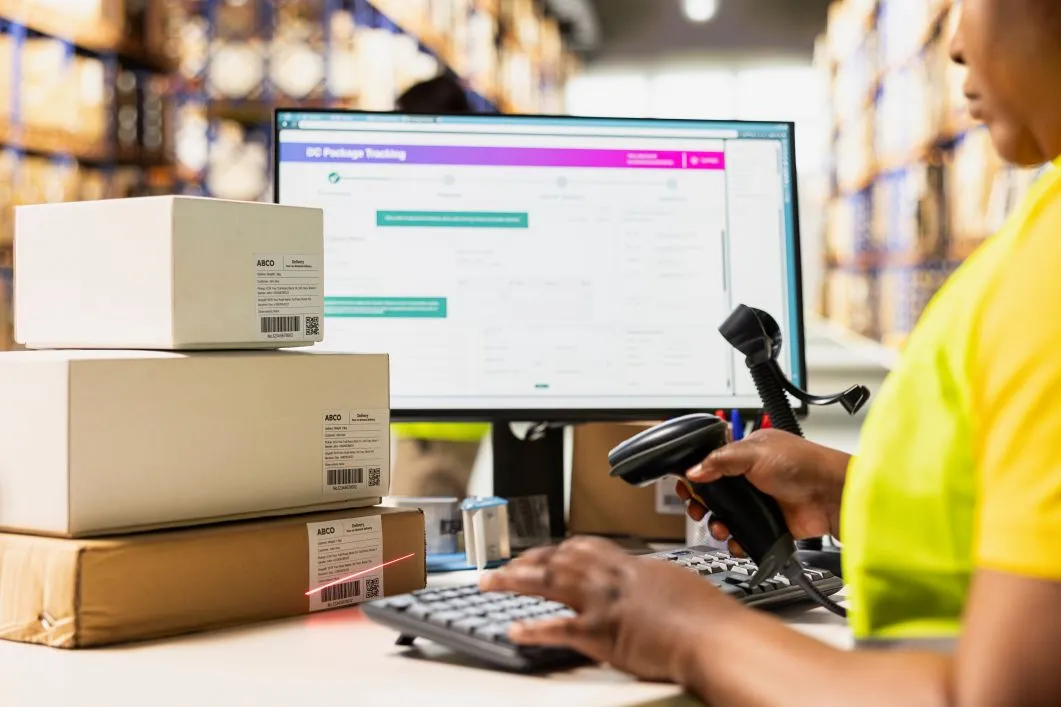
Strong inventory visibility enables businesses to monitor:
- Warehouse inventory
- In-transit inventory
- Regional stock levels
- Incoming purchase orders
- Customer demand
- Transportation delays
When these data points are connected, ecommerce inventory management becomes significantly more predictive.
Instead of asking, “What inventory do we have today?” businesses can ask the more valuable question: “What inventory will we have when customers need it?”
How Better Visibility Prevents Stockouts
Stockouts occur when customer demand exceeds available inventory.
While unexpected demand can cause shortages, many ecommerce stockouts result from limited visibility or delayed decision-making.
Common causes include:
- Inaccurate inventory counts
- Unexpected sales increases
- Supplier delays
- Transportation disruptions
- Poor demand forecasting
- Slow inventory replenishment
Better ecommerce inventory management helps identify these risks before inventory reaches critical levels.
For example, imagine an online retailer has 2,000 units remaining of a popular product. Sales data indicates those units will last approximately three weeks, while the next ocean shipment is expected in four weeks.
Without visibility, the company may discover the problem too late.
With integrated ecommerce inventory management and transportation data, the retailer can identify a projected one-week shortage earlier and evaluate alternatives, such as sending part of the replenishment shipment by air.
Visibility therefore transforms stockout prevention from an emergency response into a planned logistics decision.
Demand Forecasting Makes Inventory Visibility More Powerful
Visibility tells businesses what is happening now. Forecasting helps predict what happens next.
Combining both creates a significantly stronger ecommerce inventory management strategy.
Demand forecasting evaluates factors such as:
- Historical sales
- Seasonal trends
- Promotional campaigns
- Regional demand
- Product launches
- Customer purchasing behavior
As discussed in ecommerce demand forecasting, understanding future demand allows businesses to position inventory before shortages begin affecting fulfillment.
This becomes particularly valuable during holidays, promotional campaigns, and seasonal sales periods when customer demand can increase rapidly.
Instead of carrying excessive safety stock, businesses can use better data to determine when and where replenishment will actually be required.
Inventory Visibility and Ecommerce Fulfillment
Inventory management and fulfillment are closely connected.
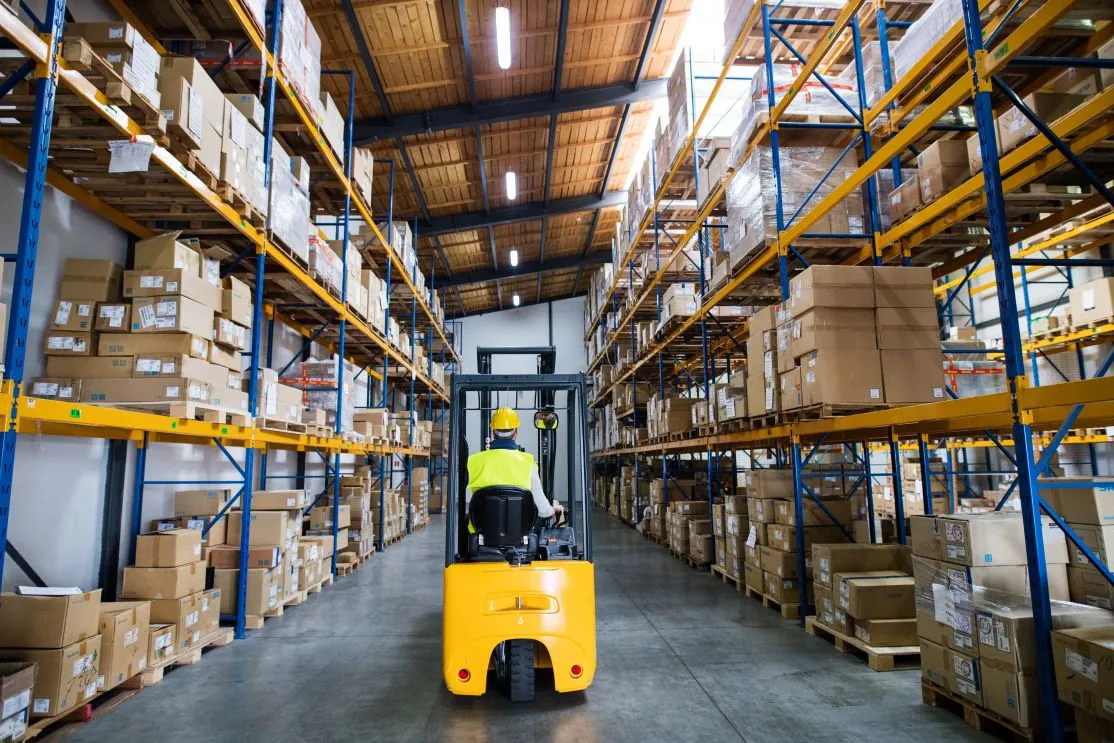
A fulfillment center cannot ship a product that is unavailable, incorrectly recorded, or located in the wrong facility.
As explored in ecommerce fulfillment, modern fulfillment operations are designed around rapid order processing and accurate inventory availability.
Better visibility helps fulfillment operations:
- Reduce order cancellations
- Improve picking accuracy
- Allocate inventory effectively
- Maintain accurate product availability
- Improve customer delivery estimates
For growing ecommerce brands, this connection becomes increasingly important as inventory is distributed across multiple warehouses and fulfillment locations.
Freight Forwarding Is Part of Inventory Management
Inventory does not suddenly appear inside a fulfillment center.
Before products become available for sale, they may travel thousands of miles through international freight networks.
This makes freight forwarding an important component of ecommerce inventory management.
Businesses need visibility into products that are:
- Awaiting pickup
- Moving through origin facilities
- In international transit
- Awaiting customs clearance
- Moving toward regional warehouses
Modern freight forwarding provides this transportation visibility while helping businesses coordinate replenishment across international supply chains.
As explored in digital freight forwarding, digital logistics platforms are improving how businesses monitor international shipments and make transportation decisions.
The more accurately businesses understand when inventory will arrive, the more effectively they can manage customer demand.
Transit Times Directly Affect Inventory Availability
Transportation speed is another critical component of ecommerce inventory management.
Long or unpredictable transit times require businesses to maintain larger inventory buffers because replenishment takes longer.
Faster and more reliable transportation provides greater flexibility.
Businesses improving ecommerce transit times can reduce the uncertainty between inventory depletion and replenishment.
This does not mean every shipment should move through the fastest transportation option available.
Instead, businesses should understand transit performance well enough to select the right mode for each inventory requirement.
Predictable products may move economically through ocean freight, while unexpected demand increases may justify air transportation for urgent replenishment.
AI Is Making Inventory Management More Predictive
Artificial intelligence is accelerating the shift from reactive inventory management toward predictive logistics.
AI systems can analyze large volumes of data across sales, inventory, transportation, and fulfillment operations to identify patterns that may be difficult to recognize manually.
Applications include:
- Predicting potential stockouts
- Identifying demand changes
- Recommending replenishment quantities
- Prioritizing urgent inventory
- Detecting transportation risks
- Optimizing inventory placement
As explored in AI freight forwarding, artificial intelligence is also helping logistics providers anticipate disruptions and make faster transportation decisions.
According to McKinsey & Company’s operations research, advanced analytics and automation are increasingly influencing how organizations improve supply chain planning and operational performance.
For ecommerce businesses, the result is a supply chain capable of identifying potential inventory problems earlier—and responding before customers are affected.
How Multimodal Logistics Helps Prevent Inventory Delays
Inventory visibility becomes even more valuable when businesses have flexible transportation options available.
Effective ecommerce inventory management means that a delayed shipment doesn’t have to result in a stockout. By identifying the risk early enough, ecommerce businesses may be able to change transportation strategies, prioritize specific products, or accelerate part of the replenishment inventory.
This is where multimodal logistics becomes particularly valuable.
As discussed in multimodal freight solutions, combining air, ocean, rail, and ground transportation gives businesses greater flexibility when supply chain conditions change.
For example, a retailer may normally replenish inventory through ocean freight. If visibility data indicates that customer demand is accelerating faster than expected, a portion of the next shipment could potentially move by air while the remaining inventory continues by ocean.
This approach protects product availability without requiring every shipment to use premium transportation.
Effective ecommerce inventory management therefore depends not only on knowing where inventory is located, but also on having transportation alternatives available when conditions change.
The Cost of Poor Inventory Visibility
Stockouts have obvious consequences, including lost sales and dissatisfied customers. However, poor inventory visibility can also create less visible costs throughout the supply chain.
These may include:
- Emergency air freight
- Excess safety stock
- Additional warehousing
- Missed sales opportunities
- Order cancellations
- Expedited transportation
- Lower inventory turnover
Businesses sometimes respond to uncertainty by carrying more inventory than necessary.
While additional safety stock may reduce the immediate risk of shortages, excess inventory creates its own financial challenges. Capital becomes tied up in products that may remain unsold, while storage and handling expenses increase.
Better ecommerce inventory management allows businesses to balance availability with efficiency.
As discussed in freight cost optimization, reducing supply chain expenses requires evaluating the complete logistics operation rather than simply searching for the lowest transportation rate.
Sometimes paying slightly more for predictable transportation can reduce much larger costs elsewhere in the supply chain.
When Air Freight Can Protect Inventory Availability
Air freight plays an important strategic role when inventory visibility identifies an approaching shortage.
It can be especially valuable for:
- Fast-selling products
- Seasonal merchandise
- Product launches
- Promotional inventory
- High-value products
- Urgent replenishment
As explored in ecommerce air freight, air transportation can help businesses respond rapidly when inventory requirements change unexpectedly.
However, air freight should not replace accurate planning.
The strongest ecommerce inventory management strategies use air freight selectively as part of a broader transportation plan. Predictable inventory can move through more economical modes, while premium transportation remains available when speed protects sales or customer relationships.
Better Visibility Improves Cross-Border Inventory Planning
International ecommerce makes inventory management considerably more complex.
Products may move through suppliers, origin warehouses, ports, airports, customs facilities, regional distribution centers, and fulfillment locations before becoming available to customers.
Every additional stage creates another opportunity for delay.
As discussed in cross border fulfillment, successful international fulfillment requires transportation, customs, inventory, and delivery operations to work together.
For ecommerce inventory management, this means businesses need visibility beyond the warehouse.
Knowing that 5,000 units are “in transit” is not enough. Companies need to understand where those units are, whether transportation is progressing according to schedule, and when the inventory will realistically become available for fulfillment.
According to the World Customs Organization, digitalization and greater data connectivity continue to support more efficient customs and international trade processes.
Greater cross-border visibility allows ecommerce businesses to identify potential delays earlier and adjust inventory plans accordingly.
Frequently Asked Questions About Ecommerce Inventory Management
What is ecommerce inventory management?
Ecommerce inventory management is the process of tracking, forecasting, replenishing, and positioning products across warehouses, fulfillment centers, and transportation networks to ensure inventory is available when customers need it.
How does inventory visibility prevent stockouts?
Inventory visibility allows businesses to compare available inventory, incoming shipments, expected demand, and transportation timelines. This helps identify potential shortages before products become unavailable.
What causes ecommerce stockouts?
Common causes include inaccurate inventory records, unexpected demand increases, supplier delays, transportation disruptions, poor forecasting, and slow replenishment.
How can freight forwarding improve inventory availability?
Freight forwarding provides greater visibility into international transportation while helping businesses optimize routes, select transportation modes, manage customs processes, and accelerate critical inventory when necessary.
Should ecommerce businesses keep more safety stock?
Not always. Excessive safety stock increases inventory carrying costs. Better forecasting and visibility can help businesses maintain appropriate inventory levels without unnecessarily overstocking products.
Building a More Resilient Inventory Strategy
The strongest ecommerce inventory management strategies combine three capabilities: visibility, prediction, and flexibility.
Visibility tells businesses where inventory is currently located.
Prediction estimates where inventory will be needed next.
Flexibility provides transportation and fulfillment alternatives when actual conditions differ from forecasts.
Together, these capabilities create a more resilient supply chain.
Rather than relying entirely on large inventory buffers, businesses can use information and logistics flexibility to respond to changing conditions.
This approach becomes increasingly important as ecommerce businesses expand internationally and supply chains become more complex.
The World Economic Forum continues to highlight resilience, digitalization, and supply chain transformation as important themes affecting global commerce.
For online retailers, resilience increasingly depends on being able to see problems early enough to act.
How LCX Freight Supports Better Inventory Visibility
LCX Freight helps ecommerce businesses connect international freight forwarding with the inventory requirements of modern fulfillment operations.
By coordinating transportation across global supply chains, LCX Freight helps businesses improve visibility into incoming inventory while creating flexible logistics strategies designed around actual business requirements.
Our capabilities include:
- International freight forwarding
- Air freight coordination
- Ocean freight management
- Multimodal transportation
- Cross-border logistics
- Shipment visibility
- Transportation planning
- Time-sensitive logistics solutions
Rather than treating freight transportation as a separate function, businesses can integrate logistics planning with ecommerce inventory management to make more informed replenishment decisions.
When inventory availability becomes critical, time sensitive freight strategies can also help businesses prioritize urgent shipments and reduce the impact of potential shortages.
The Future of Ecommerce Inventory Management
The future of inventory management will be increasingly connected, predictive, and automated.
Businesses will continue moving away from isolated warehouse inventory systems toward platforms that combine information across suppliers, freight forwarding, transportation, fulfillment, and customer demand.
Key trends include:
- AI-powered demand forecasting
- Predictive stockout alerts
- Real-time in-transit inventory visibility
- Automated replenishment recommendations
- Smarter inventory positioning
- Integrated transportation planning
- Greater cross-border visibility
These capabilities will allow ecommerce businesses to make inventory decisions based on what is likely to happen rather than simply what has already happened.
For growing online retailers, that shift can significantly improve customer satisfaction while reducing unnecessary inventory and emergency logistics costs.
Conclusion
Inventory availability is one of the foundations of successful ecommerce.
Customers expect products to be available when they place an order and delivered within the timeframe they were promised. Meeting those expectations requires businesses to understand not only what inventory is currently inside their warehouses, but also what is moving through the entire supply chain.
Effective ecommerce inventory management connects demand forecasting, fulfillment, freight forwarding, transportation visibility, and replenishment planning into one coordinated strategy.
Better visibility allows businesses to identify potential stockouts earlier, respond to transportation delays, prioritize critical inventory, and make smarter decisions about when to use air, ocean, or multimodal transportation.
The result is a more responsive supply chain with fewer surprises, more reliable fulfillment, and stronger customer experiences.
As ecommerce operations become increasingly global, inventory visibility will continue evolving from a useful logistics capability into a strategic requirement. Businesses that can see inventory clearly, predict demand accurately, and respond quickly will be better positioned to prevent stockouts, reduce delays, control logistics costs, and scale successfully in an increasingly competitive ecommerce marketplace.