
For an ecommerce customer, the buying journey doesn’t always end when a package arrives — and that’s where ecommerce returns management becomes essential.
A product may not fit. An item may arrive damaged. The customer may receive the wrong product, change their mind, or simply decide the purchase does not meet expectations.
What happens next can influence how that customer perceives the brand just as much as the original purchase.
This is why ecommerce returns management has become an important part of the overall fulfillment strategy.
While traditional logistics focuses primarily on moving inventory toward customers, reverse logistics manages products moving in the opposite direction. Returned products must be transported, received, inspected, classified, and either returned to inventory or directed toward another outcome.
When this process is poorly managed, businesses can experience higher costs, delayed refunds, lost inventory, unnecessary waste, and dissatisfied customers.
When designed effectively, ecommerce returns management can protect the customer experience while helping businesses recover inventory value and gain useful insights about their products and fulfillment operations.
For growing ecommerce brands, returns should therefore not be treated as an afterthought. They are part of the complete customer and logistics journey.
What Is Ecommerce Returns Management?
Ecommerce returns management is the process businesses use to receive, evaluate, process, and resolve products customers send back after an online purchase.
The process may include:
- Return authorization
- Customer communication
- Return transportation
- Warehouse receiving
- Product inspection
- Inventory updates
- Restocking
- Refunds
- Exchanges
- Repair, recycling, or disposal
Returns management combines customer service with logistics operations.
The customer sees the return policy, shipping instructions, tracking information, exchange, or refund.
Behind those interactions, however, warehouses and logistics teams must physically manage the returned product.
This is where reverse logistics becomes important.
What Is Reverse Logistics in Ecommerce?
Reverse logistics is the movement and management of products traveling backward through the supply chain.
A typical forward ecommerce journey looks like:
Inventory → Warehouse → Fulfillment → Transportation → Customer
Reverse logistics changes the direction:
Customer → Return Transportation → Warehouse → Inspection → Inventory Recovery
Returned products may eventually be:
- Restocked
- Resold
- Refurbished
- Repaired
- Recycled
- Returned to a supplier
- Disposed of
The correct outcome depends on the product’s condition, value, category, and the company’s return policies.
Ecommerce returns management encompasses more than just handling customer returns. It also includes product recalls, reusable packaging, excess inventory, and products moving back to suppliers.
In ecommerce, however, customer returns are one of its most visible applications.
Returns Management vs Reverse Logistics: What Is the Difference?
The terms are closely related but not identical.
Returns management focuses specifically on how businesses handle customer returns, including authorization, refunds, exchanges, and product disposition.
Reverse logistics describes the broader physical and operational process of moving products backward through the supply chain and recovering as much value as possible.
In simple terms:
Returns management = managing the return experience.
Reverse logistics = managing the physical product after it moves backward through the supply chain.
The strongest ecommerce strategy connects both.
Effective ecommerce returns management starts behind the scenes — a smooth customer-facing return process is only possible when warehouse and logistics operations are running efficiently.
Why Returns Matter to Customer Experience
Returns are sometimes viewed only as an expense.
From the customer’s perspective, however, the return experience is part of the purchase.
A complicated or unpredictable process can create frustration even if the original fulfillment and delivery were successful.
Customers want to understand:
- Whether a product can be returned
- How the return process works
- Where the product should go
- Whether return shipping is available
- When a refund or exchange will occur
- How they can track progress
Clear policies and efficient reverse logistics can make these steps more predictable.
This becomes especially important as ecommerce continues to mature. The National Retail Federation’s retail research regularly examines consumer and retail trends, including the significant operational impact returns can have on retailers.
For ecommerce brands, the goal should not necessarily be to eliminate returns entirely.
It should be to reduce preventable returns while managing necessary returns efficiently.
The Ecommerce Returns Process in 7 Steps
A structured return process can help businesses protect customer experience while recovering inventory more efficiently.
1. The Customer Requests a Return
The process begins when the customer indicates that a product needs to be returned.
Businesses may provide a return portal, customer-service channel, marketplace interface, or other system for initiating the request as part of their ecommerce returns management process.
At this stage, the business can collect important information such as:
- Order number
- Product
- Reason for return
- Product condition
- Preferred resolution
Capturing the reason for the return is particularly valuable because this information can later help identify recurring problems.
2. The Return Is Authorized
The business determines whether the return meets its policy and provides instructions.
This may include:
- Return authorization
- Shipping label
- Packaging instructions
- Return location
- Exchange options
- Refund expectations
Automation can help make this process faster while maintaining consistent return rules.
Effective ecommerce returns management starts with clarity. Customers should always know what happens next — without needing to repeatedly contact customer service to find out.
3. The Product Enters Reverse Transportation
Once authorized, the product begins moving back through the logistics network.
Depending on the fulfillment model, it may return to:
- The original warehouse
- A regional return center
- A 3PL facility
- A retail location
- A specialized processing facility
Transportation strategy matters because sending every product back to the original warehouse is not always the most economical option.
Effective ecommerce returns management depends on several key factors, including product value, geography, inventory requirements, and what will happen to the product after inspection.
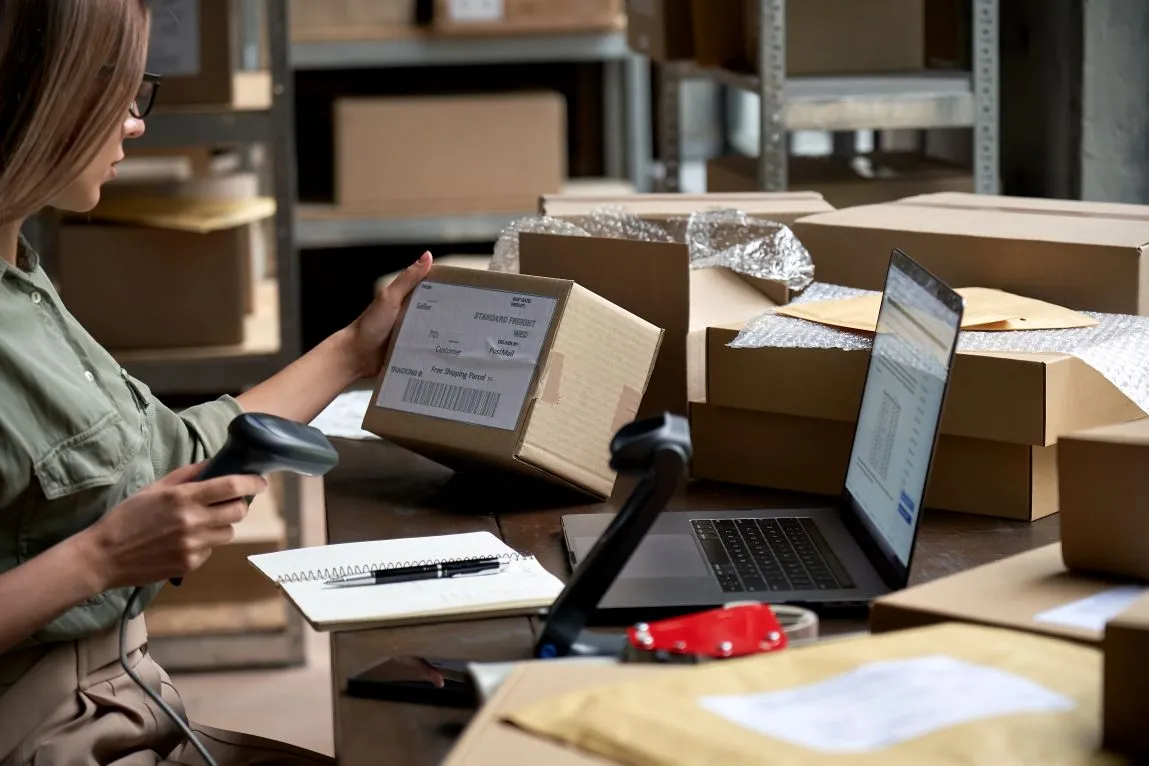
4. The Warehouse Receives the Return
When the returned product reaches a facility, it needs to be received and identified accurately.
This stage is critical.
A returned item physically sitting inside a warehouse has little value if systems do not recognize that it has arrived.
Warehouse teams may need to verify:
- Order information
- Product SKU
- Quantity
- Return authorization
- Product condition
- Packaging condition
As discussed in ecommerce warehousing, efficient receiving and inventory processes are essential for keeping products visible as they move through fulfillment operations.
The same principle applies in reverse.
Returned inventory needs a defined workflow so it does not become trapped in an unprocessed area of the warehouse.
5. The Product Is Inspected and Classified
Not every returned product should follow the same path.
After receiving, businesses need to determine its condition.
Products may be classified as:
New and resellable: Can return directly to available inventory.
Open but usable: May require repackaging or another sales channel.
Damaged but repairable: Can potentially be refurbished or repaired.
Unsellable: May require recycling, supplier return, donation, or disposal depending on the product and applicable requirements.
Fast inspection is important because the longer resellable products remain outside available inventory, the longer their value remains unavailable to the business.
6. Inventory Value Is Recovered
One of the most important objectives of reverse logistics is recovering as much value as reasonably possible.
A resellable product should return to available inventory quickly.
Strong ecommerce inventory management becomes equally important in reverse logistics because returned products must be accurately reflected in inventory systems before they can fulfill another customer order.
This is particularly valuable for products with:
- High inventory value
- Limited availability
- Strong demand
- Seasonal relevance
- Long replenishment lead times
Imagine a high-demand product is returned during a peak sales period.
Inefficient ecommerce returns management can be costly. If it takes two weeks to inspect and restock a returned item, the business may miss another sale — even though the product was physically available.
Efficient reverse logistics shortens that inventory recovery cycle.
7. The Refund or Exchange Completes the Customer Journey
From the customer’s perspective, the return is not finished when the warehouse receives the package.
It is finished when the expected resolution occurs.
That may mean:
- Refund issued
- Replacement shipped
- Exchange completed
- Store credit provided
Customer communication should remain clear throughout this process.
Even when ecommerce returns management is executed smoothly, a delayed refund can still leave customers with a poor experience.
This illustrates why returns management requires coordination between logistics, inventory systems, ecommerce platforms, finance, and customer service.
Returns Data Can Reveal Problems in the Forward Supply Chain
Returns are not simply products moving backward.
They are also data.
When businesses consistently capture return reasons, patterns can reveal problems elsewhere in the operation.
For example, unusually high returns may indicate:
- Incorrect products being shipped
- Picking errors
- Product damage
- Inadequate packaging
- Inaccurate product descriptions
- Quality problems
- Delivery issues
If one SKU experiences significantly more damage-related returns than similar products, your ecommerce returns management process should include a review of packaging and transportation methods to identify and resolve the issue.
If customers frequently receive incorrect items, the problem may originate in warehouse picking or inventory identification.
This is where returns management can help improve the forward fulfillment process.
Research from Gartner Supply Chain continues to emphasize the growing role of data, analytics, and connected technology in improving supply-chain decision-making.
Returns data should become part of that information ecosystem.
Reverse Logistics Closes the Ecommerce Fulfillment Loop
A successful ecommerce logistics strategy should not stop at customer delivery.
The complete cycle is:
Inventory → Warehousing → Order Fulfillment → Transportation → Delivery → Return → Inspection → Inventory Recovery
Every stage influences the next.
The more effectively businesses integrate ecommerce returns management into their processes, the easier it becomes to track and understand what happened to every product throughout its lifecycle.
For growing ecommerce brands, this creates a broader definition of fulfillment.
The objective is no longer simply to move an order successfully toward the customer.
It is to create a logistics network capable of managing products efficiently in both directions while protecting inventory value and the customer experience.
How a 3PL Can Improve Ecommerce Returns Management
As ecommerce order volume grows, returns can become increasingly difficult to manage internally.
A third-party logistics provider can help connect forward fulfillment with reverse logistics so products move through one coordinated operational network.
Depending on the operation, a 3PL may support:
- Return receiving
- Product inspection
- Inventory classification
- Restocking
- Repackaging
- Exchange fulfillment
- Inventory updates
- Return transportation
- Product disposition
The advantage is not simply outsourcing the physical handling of returned products.
A strong 3PL returns process can help reduce the amount of time between receiving a returned product and determining what happens next.
This becomes especially important for resellable inventory.
Effective ecommerce returns management ensures that products are restocked quickly, giving businesses another opportunity to sell returned items rather than allowing inventory value to remain trapped in the returns process.
For growing ecommerce brands, reverse logistics should therefore be considered when evaluating a fulfillment partner—not added as an afterthought once return volume becomes difficult to manage.
Marketplace and DTC Returns Require Different Workflows
Brands selling through both marketplaces and direct-to-consumer channels may need to manage different return requirements simultaneously.
Marketplaces can establish specific return windows, customer-service expectations, product conditions, and processing requirements.
DTC businesses generally have more control over their ecommerce returns management, but also assume greater responsibility for designing the overall customer experience.
The operational challenge is maintaining visibility across both.
Returned inventory from different channels may eventually arrive at the same warehouse, but it still needs to be associated with the correct order, channel, refund process, and inventory status.
This makes connected returns management particularly important for multichannel brands.
The same principle applies to forward fulfillment: inventory and customer orders should remain visible even when individual sales channels operate differently.
International Returns Add Another Layer of Complexity
Reverse logistics becomes more complicated when customers and fulfillment operations are located in different countries.
Returning an individual product across an international border may involve:
- International transportation
- Customs documentation
- Duties and taxes considerations
- Longer transit times
- Higher shipping costs
- Local return requirements
- Additional processing
For some products, shipping every return back to the original country may cost more than the value recovered.
International ecommerce businesses should therefore establish a clear ecommerce returns management strategy, including where returns will be processed, before expanding significantly into a new market.
Possible strategies include:
Centralized returns: Products travel back to a primary facility.
Regional returns: Products are processed closer to the customer.
Consolidated returns: Multiple products are accumulated before being transported together.
Local disposition: Eligible products are resold, recycled, donated, or otherwise handled within the destination market when appropriate.
The correct model depends on return volume, product value, geography, regulations, and available logistics infrastructure.
This is why reverse logistics should be considered when designing an international fulfillment strategy rather than after international sales have already scaled.
The Cost of a Return Is More Than Return Shipping
Businesses sometimes evaluate returns primarily by the cost of the return label.
The true cost can be much broader.
It may include:
- Return transportation
- Warehouse receiving
- Inspection
- Labor
- Repackaging
- Inventory carrying cost
- Product depreciation
- Refund processing
- Customer service
- Disposal
- Lost sales opportunities
A product that remains unprocessed for weeks can create additional hidden costs because potentially resellable inventory is unavailable to customers.
Effective ecommerce returns management should therefore focus on total recovery economics rather than simply minimizing transportation expense.
As discussed in freight cost optimization, logistics decisions should consider their impact across the broader supply chain rather than focusing exclusively on the lowest individual transportation rate.
The objective in ecommerce returns management is similar: determine which return pathway provides the best combination of customer experience, operational efficiency, and recovered value.
Not Every Return Should Follow the Same Logistics Path
One of the biggest opportunities in reverse logistics is intelligent product disposition.
Consider two returned products.
The first is an unopened, high-value item that can immediately be resold.
The second is a low-value product with significant damage.
Sending both through exactly the same transportation and processing workflow may not make economic sense.
Businesses can establish rules based on:
- Product value
- Condition
- Return reason
- Location
- Transportation cost
- Resale potential
- Repair cost
- Seasonal demand
These ecommerce returns management rules can determine whether an item should be returned to inventory, routed for refurbishment, consolidated with other returns, or directed toward another approved disposition process.
The faster that decision occurs, the more efficient the reverse supply chain becomes.
Reverse Logistics Can Support More Sustainable Operations
Returns also create environmental considerations.
Every unnecessary transportation movement, damaged product, discarded package, or unsellable item can increase the resource footprint associated with ecommerce.
Reverse logistics can help businesses identify opportunities to recover more value from products rather than automatically treating returns as waste.
Depending on the product, options may include:
- Restocking
- Reuse
- Repair
- Refurbishment
- Recycling
- Packaging recovery
- Donation
The U.S. Environmental Protection Agency’s circular economy resources emphasize keeping products and materials in circulation for as long as practical while reducing waste.
For ecommerce operations, efficient product inspection and classification can support this objective while also improving inventory recovery.
Sustainability and operational efficiency do not always require separate strategies. In reverse logistics, recovering usable inventory can support both.
Post-Holiday Returns Require Advance Planning
Returns management becomes particularly important immediately after peak shopping periods.
Black Friday, Cyber Monday, Christmas, and other holiday promotions can create a large wave of orders followed by increased return activity.
Businesses should prepare before that return volume reaches the warehouse.
As part of holiday ecommerce logistics, teams should anticipate:
- Return receiving capacity
- Warehouse space
- Inspection labor
- Packaging requirements
- Inventory updates
- Refund processing
- Exchange fulfillment
A warehouse optimized exclusively for outbound holiday orders can quickly become congested when large volumes of returned products begin arriving.
Peak-season planning should therefore extend beyond delivery.
The complete cycle is:
Holiday Inventory → Fulfillment → Delivery → Return → Inspection → Restocking
Businesses that prepare for the final stages can recover inventory more quickly after the holidays and reduce operational disruption.
Technology Can Make Returns More Visible
Ecommerce returns management becomes more difficult when customer-service systems, ecommerce platforms, warehouses, and inventory systems operate independently.
Technology can help connect the process.
Useful capabilities may include:
- Digital return authorization
- Automated return labels
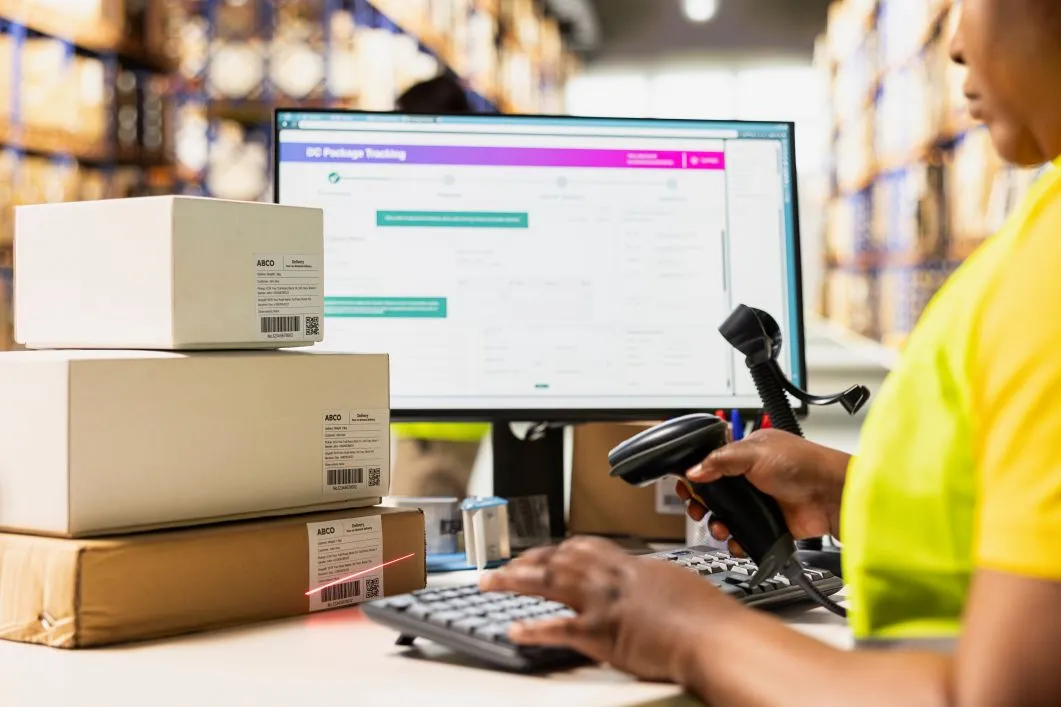
- Return tracking
- Warehouse scanning
- Inventory status updates
- Refund triggers
- Return reason analytics
- Product disposition rules
The objective is visibility.
Teams should be able to determine whether a product is still with the customer, moving through transportation, awaiting inspection, approved for resale, or already returned to inventory.
That visibility also supports better customer communication.
Instead of a return disappearing into the logistics network, customers can receive updates as the process progresses.
Common Ecommerce Returns Management Mistakes
Several operational mistakes can make returns unnecessarily expensive.
Treating Returns as a Customer-Service Problem Only
Customer service manages the interaction, but physical products still need a logistics process behind the experience.
Processing Every Return the Same Way
Different products, conditions, locations, and values may require different disposition strategies.
Allowing Returned Inventory to Sit Unprocessed
Potentially resellable products lose sales opportunities while waiting for inspection.
Failing to Capture Return Reasons
Without accurate return data, businesses lose an opportunity to identify recurring product, packaging, fulfillment, or transportation problems.
Ignoring Returns When Selecting a 3PL
Forward fulfillment may perform efficiently while reverse logistics becomes a separate operational bottleneck.
Designing International Returns After Expansion
Cross-border return costs and processing requirements should be evaluated before international order volume becomes significant.
Frequently Asked Questions About Ecommerce Returns Management
What is ecommerce returns management?
Ecommerce returns management is the end-to-end process of handling products that customers send back after an online purchase. This includes authorizing, transporting, receiving, inspecting, resolving, and tracking returned items. An effective ecommerce returns management strategy can help reduce costs, improve customer satisfaction, and streamline operations.
What is reverse logistics in ecommerce?
Reverse logistics manages products moving backward through the supply chain from the customer toward a warehouse, return center, supplier, or another destination where value can be recovered.
What is the difference between returns management and reverse logistics?
Ecommerce returns management focuses on the customer and operational return process. Reverse logistics is broader and focuses on moving and managing products backward through the supply chain. Together, these processes are essential components of a successful ecommerce returns management strategy.
How does reverse logistics affect customer experience?
Efficient reverse logistics can support faster refunds, easier exchanges, better communication, and more predictable returns, helping protect customer trust after the original purchase.
What happens to ecommerce products after they are returned?
Ecommerce returns management involves inspecting and classifying returned products. Depending on their condition, items may be restocked, repackaged, refurbished, repaired, recycled, returned to a supplier, donated, or disposed of in accordance with applicable policies and requirements.
Can a 3PL manage ecommerce returns?
Yes. Depending on its capabilities, a 3PL can receive returns, inspect products, update inventory, restock eligible items, coordinate transportation, process exchanges, and support product disposition.
How can businesses reduce ecommerce return costs?
Businesses can reduce costs by improving product information, reducing fulfillment errors, optimizing return transportation, accelerating inspection, recovering resellable inventory, and using return data to identify recurring problems.
How do international ecommerce returns work?
Ecommerce returns management for international orders can be complex. Returned items may be routed back to the original fulfillment center, a regional return facility, or another approved location. The best approach depends on several factors, including product value, transportation costs, customs requirements, and regional return volume.
How LCX Freight Supports Reverse Logistics
LCX Freight helps businesses connect transportation, warehousing, fulfillment, and inventory operations across the ecommerce supply chain.
Reverse logistics can be incorporated into this broader logistics strategy through capabilities such as:
- Transportation coordination
- Warehousing
- Ecommerce fulfillment
- Inventory management
- International freight forwarding
- Distribution
- Shipment visibility
- Cross-border logistics
The objective is to create greater continuity between forward and reverse logistics.
Products should remain visible whether they are moving toward customers or returning to the logistics network.
For growing ecommerce businesses, an effective ecommerce returns management strategy can help reduce fragmented operations while supporting inventory recovery and a more consistent customer experience.
The Future of Ecommerce Returns Management
Returns management is likely to become increasingly data-driven.
As ecommerce platforms, warehouse systems, transportation networks, and inventory technology become more connected, businesses can make faster decisions about returned products.
Future reverse logistics strategies will increasingly use data to answer questions such as:
- Where should this product be returned?
- Is the product economically worth transporting?
- Can it be resold immediately?
- Should it be repaired or refurbished?
- Which products generate unusually high return rates?
- Is a fulfillment or packaging problem creating avoidable returns?
Artificial intelligence and automation can also help identify patterns across large volumes of return data.
The goal will not simply be processing returns faster.
It will be learning from them.
Conclusion
The ecommerce customer journey does not always end at delivery.
For many orders, the final stage is a return—and that experience can influence whether the customer purchases from the brand again.
Effective ecommerce returns management connects customer service with reverse logistics, transportation, warehouse receiving, inspection, inventory recovery, and refunds or exchanges.
The strongest operations also use returns as a source of information.
Effective ecommerce returns management can help you identify problems with packaging, product quality, inventory accuracy, warehouse picking, transportation, or customer expectations.
By connecting forward fulfillment and reverse logistics, ecommerce businesses can create a more complete supply chain:
Inventory → Fulfillment → Delivery → Return → Recovery → Inventory
For growing brands, reverse logistics should therefore not be viewed simply as the cost of doing business.
When designed correctly, ecommerce returns management can help protect customer experience, recover inventory value, improve operational visibility, and turn the final stage of an ecommerce order into another opportunity to build customer trust.