


Holiday ecommerce logistics success is often determined before the first major promotional weekend begins.
Holiday ecommerce logistics can be challenging. Black Friday, Cyber Monday, Christmas shopping, and year-end promotions can all create significant spikes in online order volume within a short period of time. While this demand creates valuable sales opportunities, it also puts pressure on inventory, warehouses, fulfillment teams, transportation capacity, and final-mile delivery networks.
The challenge is that many peak-season logistics problems cannot be solved once demand has already accelerated.
Inventory that has not arrived cannot fulfill customer orders. Warehouse capacity cannot always expand overnight. Transportation space may become limited, and fulfillment bottlenecks can quickly turn increased sales into delayed shipments and dissatisfied customers.
Effective holiday ecommerce logistics therefore begins with preparation.
Brands need to anticipate demand, position inventory, coordinate inbound freight, prepare warehouse capacity, evaluate fulfillment workflows, and establish contingency plans before peak order volumes arrive.
The objective is not simply to survive peak season. It is to create a logistics operation capable of converting increased holiday demand into successful customer deliveries.
What Is Holiday Ecommerce Logistics?
Holiday ecommerce logistics is the planning and coordination of inventory, warehousing, fulfillment, transportation, and delivery operations required to manage increased ecommerce demand during peak shopping periods.
It can include:
- Demand forecasting
- Inventory planning
- Supplier coordination
- Inbound freight
- Warehouse capacity
- Order fulfillment
- Transportation planning
- Final-mile delivery
- Returns management
Holiday ecommerce logistics differs from normal operations primarily because several parts of the supply chain experience pressure simultaneously.
During peak holiday ecommerce logistics periods, every aspect of your supply chain feels the pressure. More orders require more inventory. More inventory requires greater warehouse capacity. Higher order volumes increase picking and packing requirements. And more completed orders demand additional transportation capacity.
A weakness at one stage can therefore affect the entire fulfillment process.
Why Peak-Season Preparation Must Begin Before Demand Spikes
Peak-season logistics should not begin when holiday promotions go live.
By that point, many of the most important logistics decisions have already been made.
Inventory may already be moving internationally. Warehouse labor and capacity may already be allocated. Transportation providers may be planning around expected peak volumes.
According to the U.S. Census Bureau’s ecommerce data, ecommerce continues to represent an important component of overall retail activity. During major shopping periods, higher online purchasing activity can place additional pressure on fulfillment and delivery networks.
The National Retail Federation’s holiday research also provides insight into the scale and importance of the holiday shopping period for retailers.
For ecommerce brands, this means preparation should happen upstream.
A warehouse cannot fulfill inventory that has not arrived, and transportation cannot deliver an order that has not been processed.
The strongest holiday strategy therefore begins with forecasting.
Holiday Ecommerce Logistics Checklist Before Peak Season
Growing ecommerce businesses can prepare for peak demand by focusing on eight interconnected areas:
- Forecast peak demand.
- Secure critical inventory.
- Schedule inbound freight early.
- Prepare warehouse capacity.
- Test fulfillment workflows.
- Confirm transportation capacity.
- Establish contingency plans.
- Prepare returns operations.
Each step supports the next.
The earlier potential constraints are identified, the more options businesses have to address them before customer orders are affected.
1. Forecast Peak Demand Before Ordering Inventory
The first challenge is determining how much inventory customers are likely to purchase.
Businesses can evaluate:
- Previous holiday sales
- Current sales velocity
- Promotional calendars
- Product launches
- Marketplace demand
- DTC trends
- Regional demand
- Marketing campaigns
- Seasonal product behavior
Accurate ecommerce demand forecasting helps businesses estimate which products may require additional inventory before holiday demand begins accelerating.
Forecasting should also happen at the product level.
Total sales may increase during peak season, but demand rarely rises equally across every SKU.
A small group of high-performing products may generate a significant percentage of holiday orders.
Identifying those products allows businesses to prioritize purchasing, warehouse placement, and replenishment around inventory that is most likely to affect revenue.
2. Secure Critical Inventory Early
Once demand expectations are established, businesses need to determine whether sufficient inventory will be available.
This requires understanding three categories:
Available inventory: Products currently ready for customer orders.
Committed inventory: Products already allocated to existing orders or channels.
Inbound inventory: Products purchased but still moving through production or transportation.
Strong ecommerce inventory management provides visibility into these categories so potential stockouts can be identified before they affect customer orders.
This becomes particularly important for brands selling through multiple channels.
A business may have inventory distributed across its DTC warehouse, marketplace fulfillment centers, regional warehouses, and international locations.
Without connected visibility, one channel can experience a stockout while another holds excess inventory.
Holiday ecommerce logistics requires businesses to understand not simply how much inventory exists, but where it exists and when additional inventory will become available.
3. Schedule Inbound Freight Before It Becomes Urgent
For ecommerce brands sourcing internationally, holiday fulfillment depends heavily on inbound transportation.
Products may need to move from manufacturers through:
Supplier → Origin Transportation → Air/Ocean Freight → Customs → Warehouse → Fulfillment
A delay anywhere in this sequence can reduce the amount of inventory available during critical sales periods.
This is why freight forwarding should be integrated into peak-season planning.
Businesses should identify:
- Critical replenishment shipments
- Supplier production timelines
- International transit times
- Customs requirements
- Warehouse receiving schedules
- Required inventory arrival dates
The important date is not necessarily when inventory leaves the supplier.
It is when that inventory must become available for fulfillment.
That distinction allows businesses to work backward from customer demand and determine when freight needs to move.
4. Build Flexibility Into the Transportation Plan
Not every holiday shipment requires the same transportation mode.
During the holiday ecommerce logistics rush, predictable inventory with sufficient lead time can move economically through ocean freight, while products at risk of stockout may require faster transportation methods to keep up with demand.
A flexible strategy could use:
Ocean freight for planned high-volume replenishment.
Air freight for urgent or high-value inventory.
Ground transportation for regional movements.
Multimodal logistics when different transportation modes provide the right balance between cost and speed.
As discussed in multimodal freight solutions, combining transportation modes can help businesses respond more effectively when logistics requirements change.
This flexibility becomes particularly valuable during peak season.
Instead of moving an entire replenishment order by premium transportation, businesses managing holiday ecommerce logistics might expedite only the inventory required to prevent an immediate stockout, while the remaining volume continues through a more economical mode.
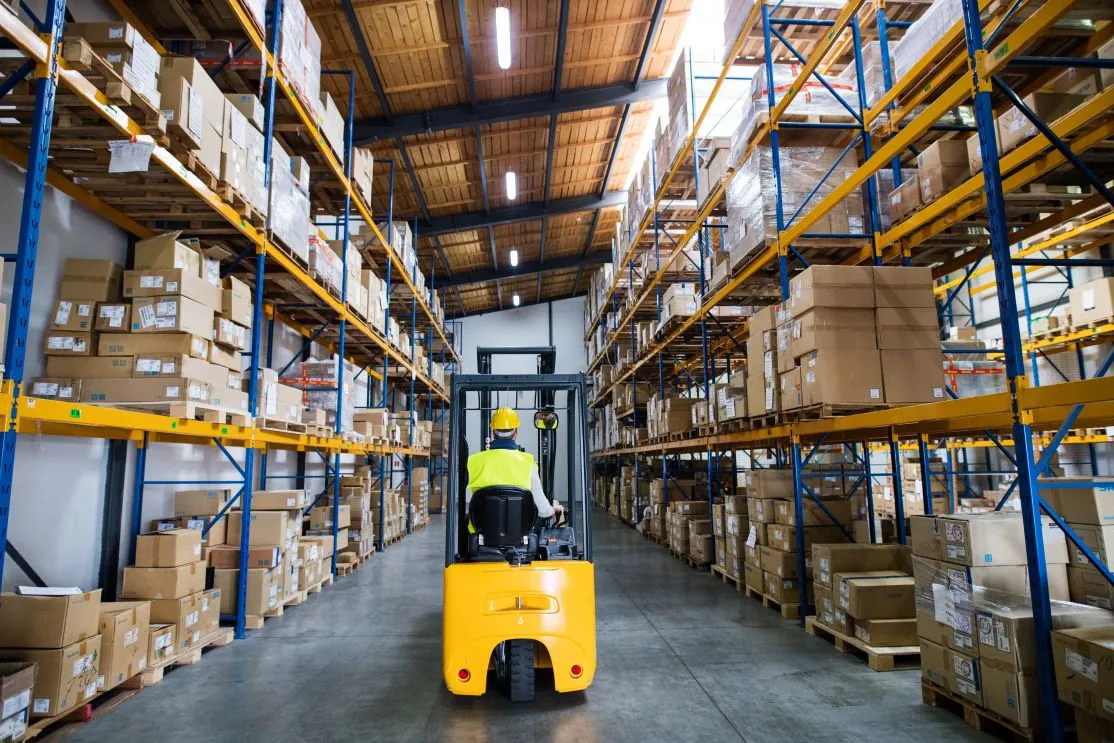
5. Prepare the Warehouse for Higher Order Volume
Inventory arriving on time is only useful if the warehouse can process it.
Peak-season preparation should therefore evaluate both storage capacity and operational capacity.
These are not the same.
A warehouse may physically have room for additional inventory while lacking sufficient receiving, picking, packing, or shipping capacity to handle increased volume.
Businesses should evaluate:
- Receiving capacity
- Available storage
- Picking locations
- Packing stations
- Labor requirements
- Packaging supplies
- Shipping-label capacity
- Carrier staging areas
- Returns space
As discussed in ecommerce warehousing, warehouse strategy directly influences how efficiently inventory moves from storage into customer orders.
Before peak season, fast-moving holiday products can also be repositioned into easily accessible picking locations.
Reducing unnecessary warehouse movement is a key part of optimizing holiday ecommerce logistics, especially when thousands of additional orders are processed over a short period.
6. Test Fulfillment Workflows Before Black Friday and Cyber Monday
Peak season is not the ideal time to discover that fulfillment workflows cannot handle higher order volume.
Businesses should test systems and processes beforehand.
Questions to evaluate include:
- Can orders enter the fulfillment system automatically?
- Is inventory updating accurately?
- Can the warehouse handle increased picking volume?
- Are packing stations sufficiently equipped?
- Are shipping labels generated correctly?
- Are marketplace and DTC orders routed properly?
- Are carrier cut-off times clearly established?
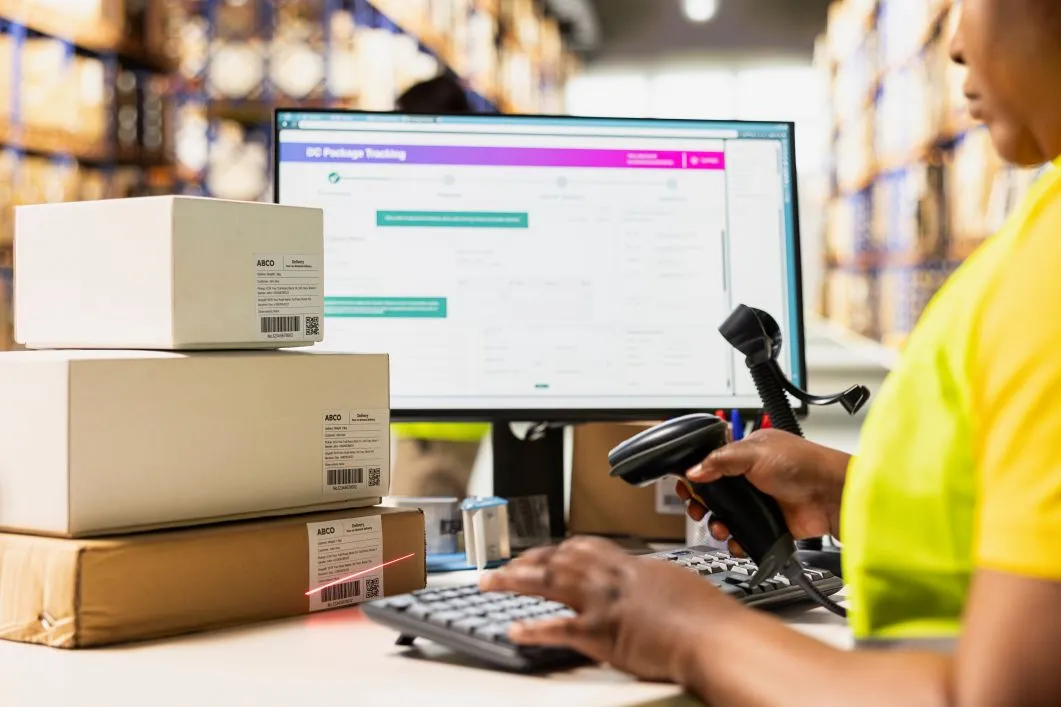
The complete order fulfillment process should be reviewed from checkout through carrier handoff.
Technology becomes particularly important here.
Preparing for holiday ecommerce logistics means ensuring your Warehouse Management Systems, Order Management Systems, ecommerce integrations, and inventory platforms are all communicating accurately before order volume increases.
Insights from Gartner Supply Chain continue to highlight the role of planning, data, technology, and digital capabilities in building more responsive supply-chain operations.
For holiday ecommerce logistics, connected systems help teams identify problems faster and make decisions using current information.
Peak Season Requires Capacity, Not Just Inventory
One of the most important lessons in holiday fulfillment is that having enough products does not automatically mean a business is prepared.
A company can enter peak season with sufficient inventory and still experience delays if the warehouse cannot process orders quickly enough.
Capacity needs to exist across the entire operation:
Inventory Capacity → Warehouse Capacity → Fulfillment Capacity → Transportation Capacity → Delivery Capacity
The slowest stage can become the bottleneck for everything behind it.
This is why peak-season planning should evaluate the complete logistics network before promotional demand accelerates.
7. Confirm Transportation Capacity Before Peak Demand
Once orders are processed, they still need to enter the transportation network.
During peak season, higher shipment volumes can place additional pressure on parcel networks, ground transportation, air capacity, and final-mile delivery operations.
Businesses should therefore confirm transportation plans before holiday order volume accelerates.
This can include evaluating:
- Expected daily shipment volume
- Carrier capacity
- Pickup schedules
- Order cut-off times
- Alternative transportation providers
- Expedited options
- Regional distribution requirements
- International transportation capacity
Relying on a single transportation option can create unnecessary risk.
If one carrier experiences delays or capacity limitations, businesses should understand what alternatives are available.
Holiday ecommerce logistics should therefore include transportation contingency planning rather than assuming normal service conditions will continue throughout peak season.
Do Not Wait for a Stockout to Consider Air Freight
Even with strong forecasting, actual holiday demand can exceed expectations.
A product may suddenly become popular because of a promotion, marketplace visibility, social media exposure, or stronger-than-expected customer demand.
When this happens, inventory replenishment becomes time-sensitive.
When it comes to holiday ecommerce logistics, air freight can be a critical option for managing inventory. When the potential cost of a stockout exceeds the additional transportation expense, air freight may be well worth the investment.
However, the decision should be selective.
Businesses can prioritize:
- Best-selling products
- High-margin inventory
- Products approaching stockout
- Inventory tied to active promotions
- Strategic marketplace replenishment
As discussed in freight cost optimization, transportation decisions should consider the broader financial impact rather than simply selecting the lowest freight rate.
When it comes to holiday ecommerce logistics, moving a limited quantity by air to protect sales while additional inventory travels through a more economical mode can provide a more balanced solution.
How a 3PL Can Help During Holiday Peak Season
Peak season can expose the limitations of internal fulfillment operations.
A warehouse that performs efficiently during normal months may struggle when order volumes increase significantly within a short period.
A third-party logistics provider can help businesses manage holiday ecommerce logistics by providing access to additional infrastructure and capabilities, without the need to build every resource internally.
Depending on the operation, a 3PL may support:
- Warehousing
- Receiving
- Inventory management
- Picking and packing
- Order fulfillment
- Transportation coordination
- Marketplace requirements
- Returns
- Distribution
For growing ecommerce brands, the value is not simply additional warehouse space.
A 3PL can provide access to fulfillment infrastructure capable of handling fluctuating order volumes.
This makes capacity planning an important consideration when selecting a holiday ecommerce logistics partner. Businesses should understand how the provider prepares for peak periods and whether their holiday ecommerce logistics capacity can scale with anticipated holiday demand.
Marketplace and DTC Peak Season Require Connected Inventory
Holiday promotions may generate demand across several sales channels simultaneously.
A brand might sell through its own website while also operating on major marketplaces and wholesale channels.
The challenge is maintaining inventory availability across those channels.
As discussed in marketplace vs DTC logistics, multichannel fulfillment works best when inventory remains connected even when individual sales channels have different requirements.
During peak season, businesses should establish inventory priorities before shortages occur.
For example:
- How much inventory should be reserved for DTC?
- How much should replenish marketplace inventory?
- Which products require safety stock?
- Can inventory be reallocated if demand changes?
- Which channel has the longest replenishment lead time?
Planning your holiday ecommerce logistics well before Black Friday or Cyber Monday gives you significantly more flexibility than scrambling to react after a stockout.
International Fulfillment Requires Earlier Holiday Planning
Brands serving customers across borders need to begin peak-season preparation even earlier.
International inventory may need to move through freight forwarding, customs clearance, regional warehousing, and fulfillment before it becomes available for customer orders.
As discussed in international fulfillment, ecommerce brands can use centralized, regional, or hybrid fulfillment models depending on customer demand and market maturity.
During the holiday season, regional inventory plays a critical role in holiday ecommerce logistics, as products are already positioned closer to customers before orders are even placed.
However, regional fulfillment only works when replenishment reaches those markets on time.
Businesses should therefore work backward from expected peak demand to establish:
Required Inventory Date → Warehouse Receiving → Customs → International Transit → Supplier Dispatch
This provides a more realistic timeline than planning around the date inventory simply leaves the supplier.
Create a Peak-Season Contingency Plan
Forecasts are valuable, but holiday logistics should also prepare for situations where forecasts are wrong.
Businesses should identify potential scenarios before they occur.
What if demand exceeds expectations?
Determine which products should receive priority replenishment and whether expedited transportation is financially justified.
What if inbound freight is delayed?
Identify alternative transportation modes, inventory locations, or suppliers where possible.
What if warehouse capacity becomes constrained?
Establish order priorities, additional labor plans, or external fulfillment support before the facility becomes overwhelmed.
What if a transportation provider experiences delays?
Maintain alternative carrier or routing options where practical.
What if a product sells out?
Coordinate inventory information with ecommerce and marketing teams to streamline your holiday ecommerce logistics, ensuring promotions can be adjusted before additional demand is generated for unavailable products.
A contingency plan does not eliminate disruption.
It reduces the amount of time required to make decisions when disruption occurs.
Customer Communication Is Part of Holiday Logistics
During peak season, customer expectations need to align with operational reality.
Promising unrealistic delivery dates can create dissatisfaction even when the logistics network performs reasonably well.
Businesses should establish clear:
- Order cut-off dates
- Processing expectations
- Shipping options
- Delivery estimates
- Tracking communication
- Holiday deadlines
Visibility becomes especially important when delays occur.
Customers generally want to know where their orders are and whether they will arrive when expected.
Accurate tracking and proactive communication can therefore support the customer experience alongside physical logistics performance.
Prepare for the Post-Holiday Returns Surge
Holiday ecommerce logistics does not end on December 25.
Higher sales volumes can generate higher return volumes after the holiday period.
Returns may require:
- Customer authorization
- Return transportation
- Warehouse receiving
- Product inspection
- Restocking
- Inventory updates
- Refund or exchange processing
Warehouses should plan space and labor for reverse logistics before returns begin arriving.
Products that can be resold should also return to available inventory efficiently.
For international orders, returns can be more complex because moving individual products across borders may be expensive.
Regional return locations or consolidated reverse logistics can sometimes provide more practical alternatives.
Peak-season planning should therefore cover the complete cycle:
Inbound Inventory → Holiday Fulfillment → Customer Delivery → Returns → Restocking
Use Real-Time Visibility During Peak Season
Once peak demand begins, businesses need current information to make fast decisions.
Important information can include:
- Available inventory
- Inbound inventory
- Daily order volume
- Fulfillment backlog
- Warehouse processing times
- Carrier performance
- Shipment status
- Stockout risk
- Returns volume
This visibility helps teams identify bottlenecks before they become larger problems.
For example, during peak holiday ecommerce logistics seasons, if orders are increasing faster than expected while inventory is declining, teams may accelerate replenishment before a stockout occurs.
If warehouse processing times begin increasing, additional capacity can be activated before orders accumulate into a significant backlog.
Holiday ecommerce logistics becomes much more responsive when teams can see what is happening across the supply chain rather than waiting for customer complaints to reveal a problem.
Frequently Asked Questions About Holiday Ecommerce Logistics
What is holiday ecommerce logistics?
Holiday ecommerce logistics is the planning and coordination of inventory, warehousing, fulfillment, transportation, delivery, and returns required to manage increased online demand during peak shopping periods.
When should ecommerce businesses prepare for peak season?
Holiday ecommerce logistics require preparation well before promotions launch. Businesses sourcing internationally may need to plan months ahead, as supplier lead times, international transportation, customs, and warehouse receiving all affect inventory availability.
How can ecommerce brands prevent holiday stockouts?
Brands can improve demand forecasting, maintain inventory visibility, establish safety stock for critical products, schedule replenishment early, and prepare expedited transportation options for unexpected demand.
How can a 3PL help during peak season?
A 3PL can provide warehousing, fulfillment infrastructure, inventory management, transportation coordination, and additional operational capacity during periods of higher order volume.
Should ecommerce businesses use air freight for holiday inventory?
Air freight can make sense for urgent, high-value, or critical inventory when faster replenishment can prevent a costly stockout. It does not necessarily need to be used for the entire replenishment shipment.
How can brands avoid holiday fulfillment delays?
Businesses can prepare warehouse capacity, test fulfillment workflows, position inventory early, confirm transportation capacity, establish carrier cut-off times, and create contingency plans before peak demand begins.
What happens if holiday demand exceeds forecasts?
To stay ahead of holiday ecommerce logistics, businesses should prioritize critical inventory, evaluate expedited replenishment, reallocate stock where possible, activate additional fulfillment capacity, and coordinate availability with marketing and sales teams.
How LCX Freight Supports Peak-Season Ecommerce Logistics
LCX Freight helps ecommerce businesses connect the logistics activities required to prepare inventory and fulfillment operations for periods of increased demand.
Capabilities can include:
- International freight forwarding
- Air freight
- Ocean freight
- Multimodal transportation
- Warehousing
- Ecommerce fulfillment
- Inventory coordination
- Customs brokerage support
- International distribution
- Shipment visibility
This integrated approach is particularly important before peak season because inbound freight, inventory availability, warehousing, and fulfillment capacity are closely connected.
Rather than waiting until a stockout occurs, businesses can plan how inventory should move based on expected demand and required availability dates.
When conditions change, flexible transportation options can also help prioritize critical replenishment.
Peak Season Is Won Before It Starts
Holiday logistics performance is rarely determined by one decision made during Black Friday or Cyber Monday.
It is the result of months of connected planning.
Forecasting determines how much inventory may be required.
Purchasing determines whether products will be available.
Freight forwarding determines when replenishment reaches the market.
Warehousing determines whether inventory can be received and processed efficiently.
Fulfillment determines how quickly orders leave the facility.
Transportation and final-mile networks determine whether packages reach customers as promised.
When these activities are planned independently, problems at one stage can quickly affect everything downstream.
When they operate as a coordinated strategy, ecommerce brands gain more flexibility to respond when actual holiday demand differs from expectations.
Conclusion
Holiday ecommerce creates tremendous growth opportunities, but increased sales only create value when businesses can successfully fulfill the orders behind them.
Effective holiday ecommerce logistics begins before peak season with demand forecasting, inventory planning, inbound freight coordination, warehouse preparation, fulfillment testing, and transportation capacity.
Businesses should also prepare for uncertainty.
During the holiday ecommerce logistics season, the unexpected can quickly become the norm. Demand may exceed forecasts, international shipments may face delays, and a product may unexpectedly become a bestseller. On top of that, warehouse capacity may tighten and transportation networks may experience significant disruption.
The strongest strategy is therefore not simply to predict peak season perfectly.
It is to build enough visibility, capacity, and flexibility into the logistics network to respond when conditions change.
By connecting inventory, freight forwarding, warehousing, fulfillment, transportation, final-mile delivery, and returns, ecommerce brands can enter Black Friday, Cyber Monday, Christmas, and year-end demand with a logistics operation designed not merely to handle more orders—but to convert peak-season demand into successful customer deliveries.